| 
|
|
|

Lee
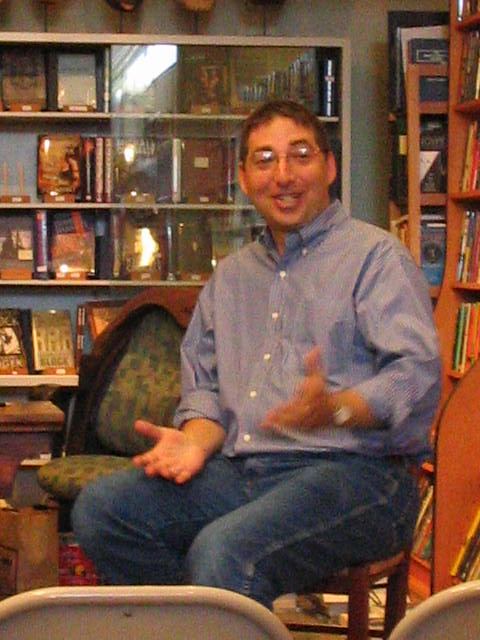
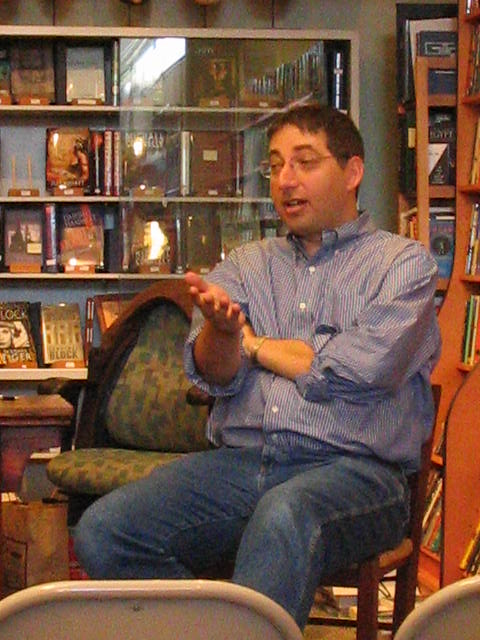
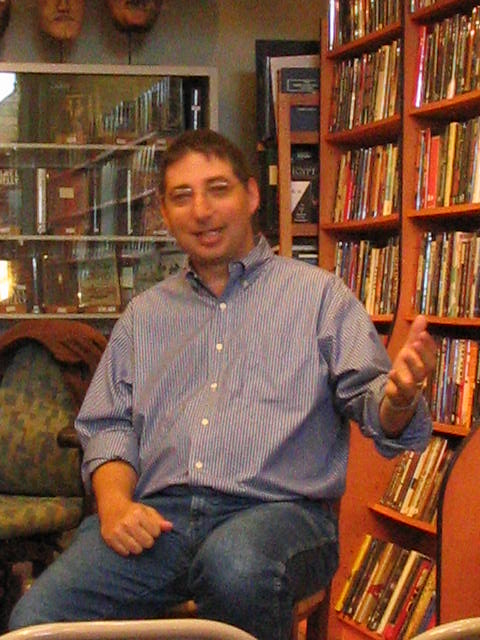
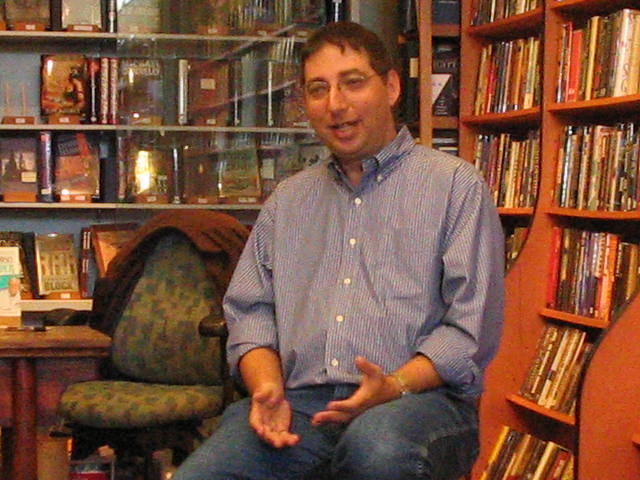
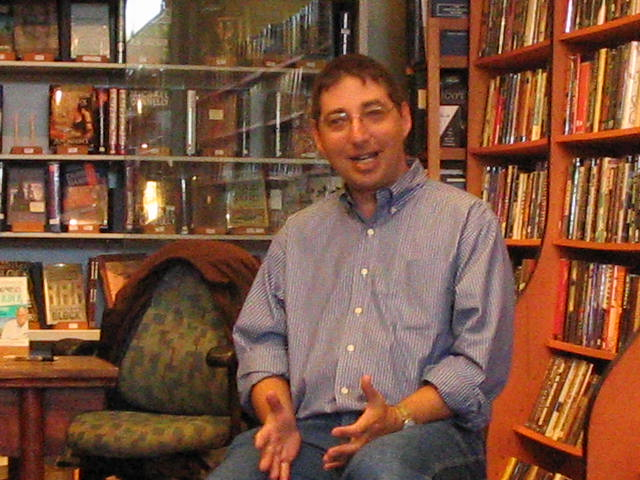
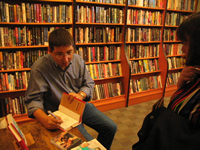
Goldberg met with me and MFP staff
photographer Seth Williams for
an in depth interview at a chinese
restaurant in San Mateo, before
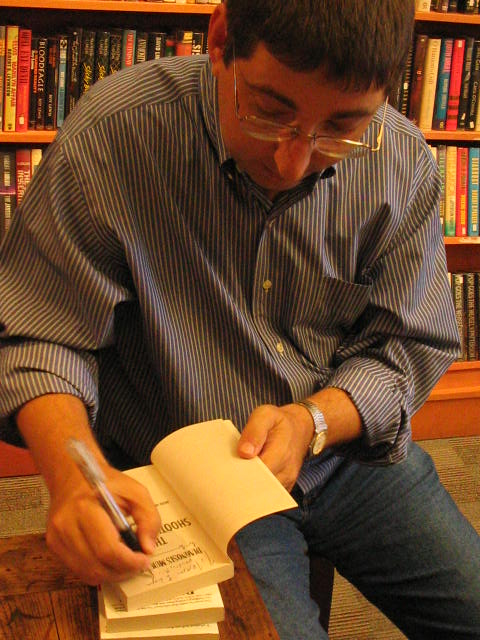
his book signing at the M
is for Mystery bookstore across
the street. Having been a regular
reader of Lee's blog and having
read a few of his books and having
received this note from him just
prior to our meeting: I'll
see you there at noon. I'll be
the Pierce Brosnan look-alike
with the growling stomach,
I was expecting... a Pierce Brosnan
look-alike. Luckily, Seth recognized
him from his picture in the back
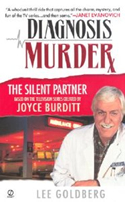
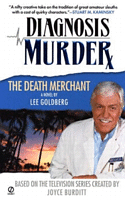
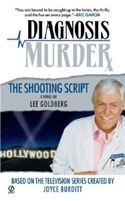
of the Diagnosis: Murder
novel.
We
chatted a little before the official
interview about the bay area,
he's from Walnut Creek originally;
his terrible accident which left
him with an arm full of titanium
and the resulting reputation with
Airport Security as the only Jewish
member of Al-Quaeda; the Atkins
Diet, which he's on; how boring
he thinks Doctor Who
is; our charming anti-artificial
sweetner waitress, whom Seth compared
to a gestapo officer; *cough*fanfic*cough*;
New York City; and the possibility
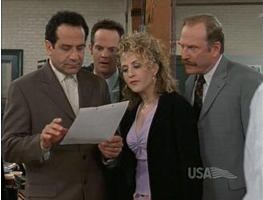
of a book signing tour with Tony
Shalhoub after the first Monk
novel is released. About that
Lee says, "The plans for
the joint signings... tentatively
to be held at Barnes & Noble
stores in LA and NY... are dependant
on Tony's schedule. Nothing has
been set yet."
What
follows is everything Lee had
to say on the record, pretty much
word for word. I'm MFP
and Seth is MFP
Photographer. Lee is
just Lee. Bracketed
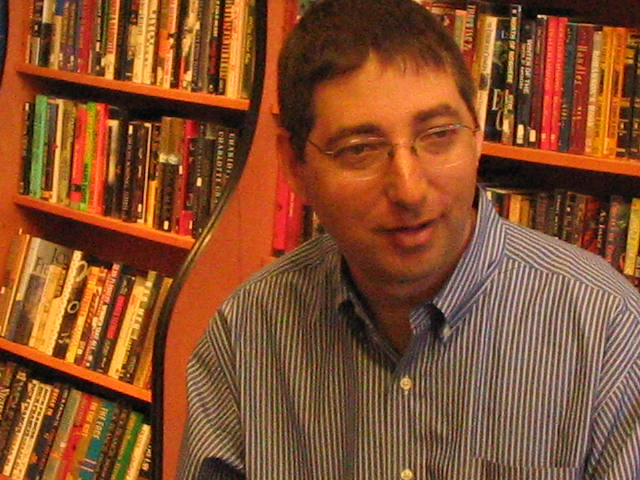
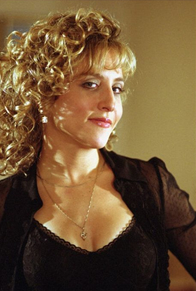
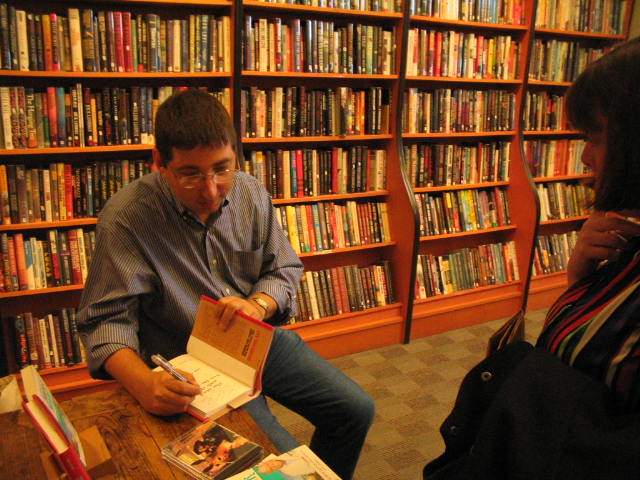
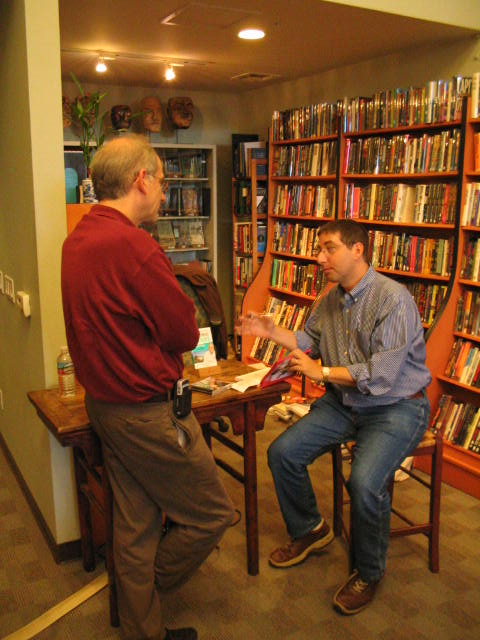
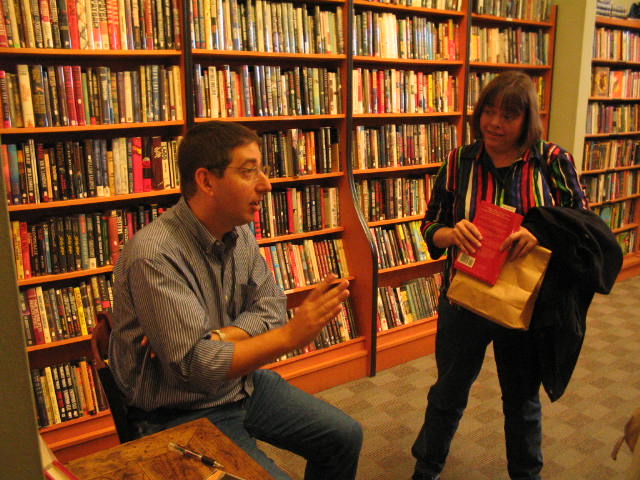
comments are mine. All the photos
of Lee are Seth's. If you click
on Seth's photos, you'll see larger
photos. |
 |
MFP:
I’ll just start
with the Monk
novel. How long did it
take you to write? When
did they ask you to start?
Lee:
Eight weeks. It actually
started months earlier.
I finally got the call
on April Fool's Day when
I was getting in the car
to go across country with
my wife and daughter for
spring break. We were
going to Sante Fe on a
road trip. |
They
had offered me the Monk
books earlier and I passed,
because they were offering
me a deal substantially
less than what I was getting
for my Diagnosis:
Murder books. I said,
"I’m not going
to do it for less than
I’m already doing
my other books for you. |
MFP:
Is that because Diagnosis:
Murder is network
and this is cable?
Lee:
It doesn’t matter
that it’s cable.
Diagnosis: Murder
is being done for Penguin
Putnam, the books. Penguin
Putnam had won the license
to the Monk books
and immediately thought
of me to write them, because
I’d done the Monk
show. They knew I’d
written novels. We got
along great. And I was
thrilled to do it, but
then they offered me substantially
less than what I was getting
for the Diagnosis:
Murders and I said,
“Sorry” and
I forgot about it. You
know, they went to other
writers, and I guess things
didn’t work out. |
|
| So
April 1st I was literally
packing the car up to
go on this trip and I
get a call saying, “Okay,
you win, I’ll give
you what you want. We
want you to write the
Monk books.” I said,
“Great, wonderful.
I’ll get started
as soon as I get back.”
“Well one little
condition, if you do the
book we must have it in
eight weeks.”
They
had wasted so much time
trying to get writers
and work things out, that
they’d run out of
time. So they had to have
the book in eight weeks,
which was actually seven
for me, because there
was no way I was going
to write on my road trip
if I wanted to keep my
marriage. So, on the trip,
while we were driving,
I thought of a plot and
I called Andy [Breckman]
up and I said here’s
my idea for the plot and
in the hotel room I wrote
a quick couple pages and
he said, “I love
it.” And that was
that. |
|
|
MFP:
So do you know anything
about, for a while Amazon
had up a book…?
Lee:
Yes, Mr. Monk and
the Fatal Lie?
MFP:
Yes. [Actually, it was
Mr. Monk and the
Bad Lie, but it
never got written, so
who cares?]
Lee:
That was a couple of
years ago. I |
was actually in New
Jersey when Andy found
out about it. I don’t
know the legal details,
but apparently MCA had
licensed a book to somebody,
and had commissioned
a book, without getting
Andy’s approval
and without realizing
Andy had control. So
that ended up getting
dropped. It didn’t
happen. I guess they
finally made a deal
with Andy and all the
other profit participants.
Because when you write
a licensed book there
are a lot of people
who get a piece of the
pie: Andy, of course,
Universal, Penguin Putnam
Publishers, me. I imagine
Tony Shalhoub gets some
because his face is
on the cover of the
book. So there are a
lot of people who have
to get a piece of it.
MFP:
But they couldn’t
actually license it
without Andy Breckman’s
approval?
Lee: Right. That’s
my understanding. You
can double check with
Andy, but that’s
right.
MFP:
They tried, but they
couldn’t
Lee:
Yes. So, Andy never
heard of that writer.
He didn’t know
anything about the plot.
He didn’t find
out until literally
while I was in New Jersey,
they looked on Amazon
and found it. I think
it was Hy Conrad who
discovered it and Andy
was quite upset.
MFP
Photographer: Did Amazon
say who the publisher
was on it?
Lee:
No, I don’t know
who the publisher was.
MFP
Photographer: Because
a lot of times Amazon
puts up stuff from one
of these, you know,
self publishing people.
Just posting things.
Lee:
This was actually a
real publisher and the
writer who was writing
it, his name now escapes
me [Dewey Graham]. He
was a well known writer.
MFP
Photographer: Oh. Okay.
So he wasn’t just
a hack?
Lee:
Oh, he writes a lot
of different novels
under different names.
Novelizations and stuff.
But you know Andy wasn’t
going to let somebody
he never met and who
he knew nothing about,
write one of these books,
you know. Andy and I
get along great. He
knows because I’ve
written two episodes
of the show that I get
it and that we’re
on the same wave length.
And now that he’s
read the first book,
actually he’s
read two books now,
after he read the first
book he was like, “Go
with God. I have complete
faith in you.”
|
|
It’s
important to me to have
Andy’s approval
and respect and involvement.
So I make sure he knows
exactly what I’m
doing. I call him with
progress reports and let
him know what’s
up and I eagerly await
it when he reads the books.
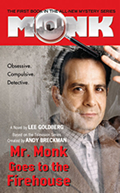
When he read Mr. Monk
Goes to the Firehouse
I was so nervous. I thought,
oh god, he’s going
to hate it, because I
wrote it in Natalie’s
voice, first person and
in a book |
 Andy
Breckman Andy
Breckman |
it
can’t be quite
the same Monk. You’re
dealing with 400 hundred
manuscript pages and
you have to have much
more of a story and
you’re spending
more time with the character
than you do in a forty
minute TV show. By
nature if it’s
a book you have to go
into more depth and
detail.
So,
Andy called up and he
spent an hour or so
on the phone just telling
me how much he loved
the book. He said, “It
was so weird at first.
I felt like a singer/songwriter
and someone else had
covered my song. It
was my song. I recognized
it, but it was different.
And I really like what
you did.”
MFP
Photographer: Wow, that’s
amazing.
Lee:
And he says, “This
is my Monk.” He
recognizes Monk, “but
the Monk in your book
is a little more sad,
a little more melancholy.
He’s funny, but
he a little more pained
and human.” He
loved hearing it from
Natalie’s voice.
He really thought that
I nailed Natalie. He
got a whole sense that
he hadn’t had
before just from looking
at the books. I tried
to reference some things
that happened in the
series. One of the difficulties
of writing these books
is it takes me, and
now I have three months
to write each book,
after that first one
that took me eight weeks.
MFP:
That was a test, right?
Lee:
No, they had to have
it because they wanted
the book to come out
the same week as the
show premieres in January.
Production schedules
on books are so protracted,
that in order to make
that schedule I had
to deliver the book
on June 1st.
MFP:
Isn’t that a long
time?
Lee:
Well. No. You have proofreading,
galleys, covers, all
this other stuff and
then you have to schedule
a time with the printing
press and distribution.
I don’t pretend
to understand all the
complications that go
into a book, but that
was as close as they
could cut it. So I wrote
that book in eight weeks
and then I had three
months to write the
next one. It takes so
long to write these
books, they’ve
already done four or
five episodes of the
TV series, so the danger
is I’m going to
write something that’s
already been contradicted
by the TV show . It
actually happened to
me in the second book.
I was writing about
details of Natalie’s
life that suddenly changed
right after I saw “Mr.
Monk Goes to a Wedding.”
There was another episode,
“Mr. Monk and
Mrs. Monk,” that
changed something else
I had in my book.
So
I get scripts ahead
of time and I try to
fashion the books so
they can fit into the
continuity of the series,
but I can’t be
100 percent perfect,
you know. |
|
| |
By
the time my second book comes
out, the second half of the
fourth season will be out. I
had to cover things that aren’t
in the show. I had to say where
Monk lives, where Natalie lives,
where Dr. Kroger’s office
is and that stuff. I’ve
got a little more detail about
their lives and I describe the
city a lot more. I don’t
get into Monk’s head because
I do it from Natalie’s
point of view, but I’m
in her head. So I have to go
into a lot more detail about
how she feels about the world
and about Monk and about life.
What she’s doing when
she’s not with Monk and
her relationship with her daughter.
MFP:
Is she dating when she’s
not with him?
|
Lee:
She does have a sex life outside
of Monk, which was hinted at the
first time he met her when he
found the birth control pills.
She still deeply loves her husband
but she’s not a monk, no
pun intended. In the first book
she dates. In the first book,
Mr. Monk Goes to the Firehouse,
his apartment is being termite
sprayed. Of course, he isn’t
going to stay there so he moves
in with Natalie for a week. And
completely ruins her life. So
while they’re solving the
case he’s actually living
with her. Andy loved that, just
loved that. In
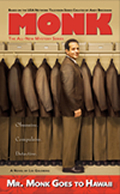
the second book, Mr. Monk
Goes to Hawaii, she goes
to Hawaii for her best friend’s
wedding, and
I won’t give away everything,
but
Monk comes too.
I know a lot of
fans are going to go, “Now
wait a minute. How’s he
going to go on an airplane for
five hours?
MFP:
He’s been on an airplane
for five hours before.
Lee:
Yeah, they didn’t say
how he got to New York, but
I have some fun with that. In
fact, there is a teaser chapter
at the end of Mr Monk Goes
to the Firehouse, that
is the chapter of Monk on the
airplane, where you’ll
discover how he gets to fly.
You know putting him in that
situation a completely different
culture, a completely different
way of life, it was so much
fun. |
The
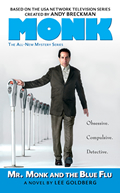
third book is tentatively titled
Mr. Monk and the Blue Flu
and in that one the police department
goes on an unofficial strike.
So the Mayor drafts Monk in
the interim, basically reinstates
him as a homicide detective
while the police are on strike.
So suddenly he’s got not
only his old job back, but he’s
got Stottlemeyer’s job.
But the police resent it because
he’s crossed the picket
line.
|
|
|

|
He’s
also got a rag tag team of unqualified
and retired cops trying to solve
crimes. That’s the next
one I’m going to do.
MFP:
So Firehouse is going
to be an episode?
Lee:
That’s the plan, now whether
it will actually happen I don’t
know because Andy said, “I
would love to do it as an episode.” |
And
I said, “I’ll be glad
to.” So the plan is for
me to go out there in January
or February, out to Summit and
write the episode, with my partner
William Rabkin, who I do all my
TV work with, but it depends on
whether or not I’m on another
show. If I’m executive producing
another series, I may not be able
to do it.
MFP:
Is that in the wind?
Lee:
It may always be in the wind.
The only reason I haven’t
done more Monk episodes
than I have is because I was executive
producing Missing and
I wasn’t able to do it.
Andy would have had us do more
than the two we’ve done,
but we were tied up on another
series. We love doing Monk.
We love the whole gang there.
It’s just a great group
of people. It’s fun to go
out to Summit, New Jersey to do
the scripts.
MFP:
That’s an unusual set up,
isn’t it?
Lee:
It’s a very unusual set
up and it’s also very refreshing.
They’re so outside the Hollywood
system out there. They’re
just a bunch of guys hanging out,
making each other laugh. The walls
are covered with index cards of
Monk situations and phobic
situations and funny bits and
it’s a lot of fun. I mean,
Andy is the heart and soul of
Monk. I mean, he is Monk,
he’s Monk’s voice.
Without Andy there would be no
Monk. He’s like Larry
David on Seinfeld. He is the show.
It’s Andy. You know all
the other writers are very talented,
they do brilliant stuff, but ultimately
Andy takes a pass at every script
and gives it that special something.
He’ll take your joke and
he’ll turn it and just….
He’s great.
He
didn’t do that with my book,
which I was stunned, but he really
liked the book. He thought it
was very funny. He told me it
sounded like Monk, so
I was relieved. Hopefully, I’ll
be writing these Monk
books for a long time to come.
Obviously, if they’re successful
I’ll just keep doing them.
The way it is now, I alternate
between Diagnosis: Murder
and Monk books on the
side.
MFP:
You’re going to keep doing
the Diagnosis: Murder
books?
Lee:
Oh, yes. They’re very successful.
So I’m writing number seven
right now. When I turn number
seven in, I write the third Monk
and after I write the third Monk,
I write the eighth Diagnosis:
Murder. Then we renegotiate
my Diagnosis: Murder
contract. I’ll probably
write four more Diagnosis:
Murders. Before I finish
the third Monk they’ll
probably decide whether or not
to do more. My guess is they will.
They’ll probably give me
a contract for three more Monks
and I’ll just keep doing
them. I mean I could write Monk
novels for the rest of my
life. I’d be thrilled to. |
The
only danger is that they’ll
think of plots before I do,
in the same arena. But it’s
not that big a danger. We did
200 episodes of Diagnosis:
Murder and I’m still
finding new things to write
about that we didn’t do
on the series. So I’m
sure I’ll be able to find
things, like taking Monk to
Hawaii, for instance. That’s
something the series can’t
do. They don’t have the
money and resources to go to
Hawaii. So I know that’s
a story that will not end up
as an episode of Monk.
The Blue Flu could
have been an episode of Monk,
but even to do Mr. Monk
Goes to the Firehouse,
we’re going to have to
trim a lot of stuff out.
MFP
Photographer: I was going to
say, to take a novel and turn
it into a script is difficult.
|
|
Lee:
In the Monk plots they
have one murder. Because the books
are much longer, I have to have
much more going on in them. It
can’t just be that one murder
I’ve got to have a couple
of crimes that he solves: little
mysteries and things. I’ve
got to make the murder a little
more twisty and complex than you
might have in an episode. Most
episodes of Monk you
know who the killer is, within
the first act Monk goes, “He’s
the guy.” You can’t
do that in a book. If you said,
“He’s the guy,”
in chapter one, the reader is
going to be bored for the next
307 pages. When I said 400 pages,
that’s manuscript pages,
I think the actual Monk
book is like under 300. So I have
to add more. So when he goes to
Hawaii he solves A, what I call
the A crime, but there’s
a B, C and D crime that he solves
too. So in Mr. Monk Goes to
the Firehouse, there’s
other stuff that he solves along
the way: little situations, big
situations. I managed to fool
Andy, which really thrilled me.
MFP:
He didn’t figure it out?
Lee:
Well, he didn’t figure out
all the mysteries. That was fun.
MFP:
And he didn’t have any suggestions
or changes?
Lee:
No, no.
MFP:
But he did when you wrote episodes
for the show?
Lee:
Oh, of course, when you write
episodes for the show you’re
breaking the story with Andy and
the staff. It’s a group
effort. You’re doing it
with them. Every episode is broken
with Andy in the room. So he has
a huge hand in developing every
single episode. Nothing is done
outside of his involvement. The
group plots the story and then
one writer goes off and writes
the draft and then Andy does the
production rewrite. But everyone
there has been on the staff for
so long they know how Andy thinks.
They know how he tells a joke.
They know how he likes the plots.
He’s got a very talented
group: his brother David, Tom
Sharpling, Daniel Dratch, Hy Conrad,
Joe Toplyn, you know, a great
bunch.
MFP:
Most of them come out of a comedy
background, right?
Lee:
Yes. Hy Conrad comes out of mystery.
But then they bring in guys like
me who have experience in mysteries.
But now that Andy and those guys
have been doing Monk
for a few seasons, I think it’s
fair to say, they’re mystery
guys now. They may have started
out in the comedy field, doing
skits and monologues and what
not, but now they’re steeped
in it. They’ve done four
seasons and so many mysteries.
They know mysteries as well as
anybody, if not better.
MFP:
Why did you choose Natalie’s
perspective for the books?
Lee:
Because I didn’t think you
want to be inside Monk’s
head. That takes all of the fun
and mystery out of it. You don’t
want to know what Monk thinks.
You want to be astonished and
surprised and taken aback by his
behavior.
|
|
|
I
thought getting inside his head
would be wrong. You look at all
the great quirky detectives Sherlock
Holmes, Nero Wolfe: they’re
told from the assistant’s
point of view. Archie Goodwin talks
about Nero Wolfe and his behavior
and Dr. Watson talks about Holmes.
I thought that this way you could
keep a distance from Monk. You get
close to him, but Natalie’s
like the audience’s point
of view and we can see him and the
crazy things he does and she can
be as confused and baffled by his
behavior as we are and then surprised
when it has a meaning or purpose.
|
MFP
Photographer: That’s the charm
of it. You left the charm in.
Lee:
Yes. I want to capture the feel
of the series, but also I want these
books to stand on their own. They’re
original novels. They’re not
based on episodes. So I want them
to almost read as if they’re
the books the TV series is based
on. You need to get more than you
would get from the DVD, more than
you’d get from just watching
an episode. I’ve got to give
more substance. So I delve into
Monk’s back story. I delve
into Natalie’s feelings. I
delve into their relationship in
ways that they haven’t or
can’t on the TV show, but
within parameters that Andy approves
of. There are no back story elements
or relationship elements that I’m
doing that Andy isn’t completely
on board with. In fact, you’ll
see him refer to some jokes and
stuff in the books, in the episodes.
In fact, he refers to Diagnosis:
Murder in an episode coming
up. He has a character reading aloud
from one of the Diagnosis: Murder
novels.
MFP:
Which one?
Lee:
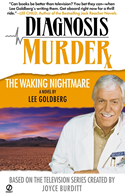
Which novel? The Waking Nightmare.
I can’t remember which episode
it was. I think it was “Mr.
Monk and the Captain’s Marriage”
I think is the one where they read
aloud from the Diagnosis: Murder
novel.
MFP:
Actually, “Mr. Monk Goes to
Mexico” episode reminds me
of Waking Nightmare.
Lee:
Yeah. Well, you know why?
MFP:
Because of the parachute thing. |
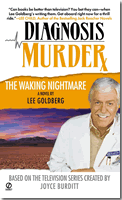
The
Waking Nightmare |
Lee:
Yes, and the original way I pitched
it to Andy was, and I don’t
want to give the ending away to
Nightmare, but that was
the way I pitched it. He said, “You
know, it would be better if he drowned
in mid-air.” So I took the
idea that we originally pitched
and used it for The Waking Nightmare
and we went a different direction
in the Monk episode. In
“Mexico” a guy jumps
out of an airplane and he drowns
in mid-air. How’d he do it?
In the Diagnosis: Murder
book a famous publisher and his
entire board of directors jump out
of an airplane with six guys and
a videographer and all that and
when he lands on the ground he’s
been stabbed in the chest. So how
the hell did he get stabbed in the
chest, which person in the air did
it? |
That
was the original way we pitched
it to Andy. Andy had a different
idea, but it was too good of an
idea not to use so I went with it.
Also in Waking Nightmare
Dr. Mark Sloan witnesses someone
jump off a ledge and commit suicide
and becomes obsessed with finding
out why. I wrote a Spenser:
for Hire where Spenser looks
out the window sees a woman jump
off a ledge and becomes obsessed
with finding out why,
which had a completely different
plot. This was the original plot
and those producers had a different
idea, so I’ve always kept
that in the back of my mind. A good
writer never throws away a good
idea. You just stick it in a drawer
to use another time.
MFP:
How did they approach you to write
the first episode, you and your
partner?
Lee:
As I recall, my agent sent scripts
that Bill and I had written for
other shows to USA Network, because
Monk was looking for
freelance writers. USA Network
read our scripts and really liked
them and passed them on to Andy.
I’m assuming Andy read our
scripts and liked them because
he said, “Next time I’m
in L.A. I want to have dinner
with you. Let’s get together.”
So he came to L.A.. We had dinner
with him and we pitched him some
ideas for the show and he liked
them. Then we talked about other
ideas he had in the works and
he liked our input on that and
he said, you know, “Deal.”
He got us a flown out to Summit.
We spent a week out in Summit
and we had a great time, just
a fantastic time. It’s like
the perfect show. I wish I could
work on it full time, but it hasn’t
worked out that way. It’s
a pleasure to write.
I’m
so pleased that Andy’s entrusted
me with the Monk books. It’s
an honor and a thrill to be able
to write it and really make it
my own. His sharing his creation
with me is just wonderful. I feel
very lucky and flattered to be
trusted with it. I’d be
terrified to trust somebody to
write a book with my character.
And I still get to write the episodes.
He’s allowed me to share
his creation on both levels in
books and TV.
MFP
Photographer: That’s true.
A lot of novelists don’t
get to do scripts. You just get
two different worlds.
MFP:
Which do you like more?
Lee:
They are entirely different, entirely
different experiences. Writing
the scripts I do with my partner
William Rabkin. I do all my TV
work with him. And you’re
with the staff and crafting a
story with Andy and his staff
is so much fun. I mean, you just
laugh all day long. So much stuff
doesn’t get in the script
that’s bandied around the
room. It’s hilarious. It’s
so different from all my other
professional television experiences.
It’s much looser, much more
casual, much more fun. And with
the staff there’s continuity.
There’s not a big turnover
like there is on other shows.
So they’re very enmeshed
in the show. They’re very
comfortable. It’s like Andy
and his friends in the club house
doing a TV show and you’re
invited to share in the fun. And
the character is so refreshing
and the situations are so refreshing,
so different from the clichés
of TV.
Television
is very much a group effort. When
you write a script it’s
not locked in stone. It’s
going to change. It’s going
to change because Andy’s
going to rewrite it. It’s
going to change because production
concerns force rewrites. It’s
going to change because of actors
and directors. It’s in fluid
motion all the time. A book is
entirely my own and unaffected
by production concerns or actors.
I’m working with Andy, but
I plot it myself and I write it
by myself and it’s entirely
in my head and I live it for months.
Whereas a script you plot it in
a week and you write it in two.
It’s a three week experience
when you’re a freelancer.
A TV show is sort of ephemeral
you write it and woosssh it’s
gone. Whereas a book, it lasts.
You can hold it in your hand and
it’s in book stores and
it lasts a lot longer. There’s
a tactile thing that comes from
writing a book. It’s all
mine. I mean, it’s Andy’s
character and Andy’s world,
but the book is mine. It’s
a different experience.
It’s
different writing prose and writing
scripts. In scripts everything
in the story and everything the
characters do has to be shown
through action and dialogue. You
have to act out everything; whereas
in a book, you express emotions,
feelings, the past, thoughts.
You can go off on asides. You
can show people’s feelings
by what they’re thinking.
You can’t do that on TV.
You know action and dialogue reveal
character and intent and emotion
and thought. A script is much
more of a working document for
a bunch of other professionals
to do their work from: the wardrobe
people, the set decorators, the
location managers, the lighting
people. The script is a working
document.
MFP:
More like a blueprint.
Lee:
Exactly. Whereas a book is not.
A book is an experience. You’re
seducing the reader and bringing
them into your imagination and
holding them there for as long
as they’re reading the book.
You construct everything. You
construct the sets, the wardrobe,
the world. You’re God. In
a script, to describe a restaurant
you go:
INT–
RESTAURANT– DAY.
It’s a Chinese restaurant.
Monk takes one look at the live
fish in the window and screams….
Whatever.
In a book, you describe the restaurant.
The vinyl was blue. The window
was foggy. You describe everything
that’s going on. You have
to set the scene for the reader.
It’s an entirely different
skill. That’s why some novelists
are terrible screen writers and
why some screen writers can’t
write a book. They can’t
jump back and forth. I started
as a novelist, so I came into
it first as an author and then
got very active in television
and then went back to books.
MFP:
But you’re not going to
say which you like better?
Lee:
No, they’re too different.
There isn’t one I like better
or worse. Although probably, if
the books paid as well as television,
I might just write books. Only
because it allows me to be home
with my family more and not have
to deal with network notes and
studio notes and actor notes and
a lot of the aggravation that
is involved with writing television.
MFP:
Is there more aggravation with
network people than there is with
publishers?
Lee:
Oh yeah, oh yeah. Everybody has
an opinion in TV. You get notes
from the other writers on the
show. You get notes from your
line producer, that’s the
person in charge of the physical
production of the show, telling
you whether they can actually
make it in seven days with three
days on the standing sets and
four days on location on our budget.
You get notes from the wardrobe
people. You get notes from your
director. You get notes from the
actors. You get notes from the
actors’ agents. You get
notes from the actors’ agents’
psychic colorists. You get notes
from the guy who serves donuts
on the set. You get notes from
the studio. You get notes from
the network. You get noted up
the ying yang. As a producer your
job is to take all those notes
and find a balance and make everyone
happy and yet still maintain your
creative vision of the show. Now
on Monk, I’m shielded
from all that. I write my script
and Andy deals with all that stuff.
Andy and Tom Sharpling deal with
all that. But when I’m doing
Missing or Diagnosis:
Murder or all the other shows
I’ve done, I’m the
one who has to deal with all that
stuff. With a book you get notes
from your editor. And that’s
it. And in the case of these tie-ins,
I get notes from Andy and my editor,
but Andy is wonderfully happy
with the books, thank God.
MFP:
Why is it when they have a staff
of writers that they still look
for freelancers?
Lee:
A couple reasons: one is required
and one is just common sense.
The required reason is the Writers
Guild requires every TV show to
give one out of 13 episodes to
a freelancer. The logical reason
is…. you got how many writers
are there on Monk? There’s
Andy, David, Daniel, Joe and Hy.
There are five writers on Monk.
[We forgot Tom Sharpling, that’s
six.] They do 18-22 episodes a
season [16 for Monk,
actually].
That’s
a lot of writing, a lot of stories.
You can get burned out very fast.
It’s great to have fresh
ideas come in, fresh writers,
fresh troops, a fresh perspective.
On a TV show you can get very
insular. It’s just the five
of you and you just kind of go
running around. You get very locked
into one point of view and you
run out of ideas. Every now and
then someone comes in and it’s
just a breath of fresh air to
the show. It’s another attitude
another point of view, another
way of looking at things. Now
their idea that they come in with
may not be on target. It could
be 40 percent of the way there
and that 40 percent is worth a
fortune in creative capital to
a writing staff.
|
|
|
When
we were doing Diagnosis: Murder,
I was executive producer, we did 24 episodes
a season and we had a staff about the size
of the Monk staff. That’s a lot of
writing and you have to plot a new script
every week, plus you’re editing and
you’re in pre-production and your
music spotting. You’re dealing with
a lot of other stuff that gets in the way
of the creative process. When you’ve
got three seasons, 75 episodes and all that,
it’s hard to come up with stuff, but
when you have freelancers come in and pitch
they’ll give you ideas, inspiration.
Their initial idea may not be that great
but there may be a germ in it that allows
you do go off on an idea you never would
have thought of otherwise. Also when you
have a good freelancer, it’s a vacation.
It’s a week off, because they bring
you a script that’s so good. That’s
a script you didn’t have to write.
So you can go home at 6 o’clock at
night. You can see your family. So having
a script come in and it needs a little rewrite,
it’s still easier than writing a script
from scratch yourself or having your staff
have to do it. So I think that Monk
has three or four freelancers a season and
that just helps reinvigorate the show, keep
it fresh and from falling into a rut, telling
the same kind of mystery, the same kind
of story all the time.
MFP:
I’ve got a couple of questions about
the episodes that you did write for the
show.
Lee:
Yes “Mr. Monk and the Cross Dresser,”
“Mr. Monk and the Lunatic Transvestite,”
“Mr. Monk and the Talking Dog.”
MFP:
All of which were good episodes.
Lee:
“Mr. Monk and Urinal.” These
are all classic episodes.
MFP:
“Mr. Monk Goes to Mexico.”
Lee:
Yes.
MFP:
The relationship between Stottlemeyer and
Monk seems to take a step forward there.
Was that something you brought to it?
Lee:
I brought nothing to the show by myself.
I mean it’s hard for me to say who
came up with what because we did our pitch
with Andy in the restaurant that night and
then we flew out to Summit a week or so
later and then we all were in the room spitballing
ideas. Everyone was contributing you know,
Tom Sharpling, David Breckman, Andy, myself,
Bill. No one took ownership of the ideas
that would turn up on the board. Andy’s
the one who often said “Yes, we’ll
go with that” or “We’ll
not go with that,” but it was a completely
collaborative effort.
All
I can say is that, it’s been a couple
of years. If you’d asked me the day
after I could have told you, but now so
much time has passed, but I think that if
you’re going to say Monk died, Stottlemeyer
is going to react. When he hears the news
Monk has been killed, the real emotions
are going to come out. Although the show’s
a comedy, at its heart is genuine emotion.
We all know Stottlemeyer genuinely cares
about Monk. That they really feel for one
another. Despite all the aggravation Monk
gives him, he loves Monk. So when he found
out Monk died, of course, he’s not
going to have a comedic reaction to it.
So in that regard I think that was an obvious
thing you had to do. You had to go to that
next level of Monk and Stottlemeyer’s
relationship, because you’re dealing
with the fact he died if you want to believe
that…. And then it ends with a joke.
He crawled through the mud? He’s alive.
He would never do that. [Ultimately , of
course, that bit went to Sharona.] You know
Stottlemeyer can’t be caught having
said all that embarrassing stuff. As I recall
he tells Disher, “Don’t ever
breathe a word of this to Monk or I’ll
kill you.” You know, it’s necessary. |
| MFP:
That was very nice having the Stottlemeyer
and Disher replacements in Mexico.
Lee:
I can’t remember whose idea it was,
but that was one of the very early things
that came out, to have the exact….
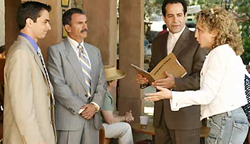
If you notice I think there’s an episode,
I can’t remember which one, where
Stottlemeyer has to call a cop in Paris
and the guy dresses and looks just like
Stottlemeyer.
|
 |
MFP:
“Paperboy,” yes.
Lee:
Basically every cop in the world is Stottlemeyer
and every cop in the world has a Disher.
In fact, we had it, if I remember right,
Plato instead of Disher. Stottlemeyer we
had to come up with Alameda or something.
We couldn’t find a Mexican version
of Stottlemeyer, but we could for Disher.
So you know it’s a joke and we didn’t
want it to be too subtle: we wanted people
to notice they were dressed exactly the
same. They’re exactly the same relationship
and exactly the same kind of characters.
I thought about, when I did Mr. Monk
Goes to Hawaii of having a Stottlemeyer
and Disher in Hawaii, but I decided not
to. I just went with original characters.
MFP:
In "Wedding," there’s also
a Stottlemeyer look alike.
Lee:
Yeah, that gave Andy the giggles right away.
I mean there was stuff that we had joked
about doing that we didn’t do. I think
at one point when Monk’s food and
water and clothes are stolen and he’s
sitting at that restaurant and he looks
around and everyone is dressed like him
and they’re all drinking his water.
The whole town is full of thieves. Everyone’s
wearing his clothes and, of course, he only
has one outfit so the whole village is full
of Monks drinking the sparkling water the…
the…. I forgot the name of the water,
oh my god.
MFP:
Forgot the name of the water? Sierra Springs.
Lee:
Sierra Springs. So we thought that was a
little over the top.
MFP:
Yeah, the Sierra Springs. Any idea whose
idea that was?
Lee:
That’s Andy’s.
MFP:
That’s his.
Lee:
Oh, to bring it. For Monk to bring all his
own water, that was in our original pitch.
That’s Bill and I. That Monk brings
all his own food and water and that the
food and water is lost and he’s dehydrating.
That was us. My favorite thing in the script
and I wish I could say it was my idea. I
honestly don’t know whose idea it
was. Instinctively, I’d think it’s
probably Andy because it’s his kind
of thing, but to have a summation where…
in the original script it was different
than it is in the final episode. Monk just
says, “Joe did it! Bye!” And
he leaves, so the cops and the bad guy have
to run along side the car as Monk’s
driving out of town to get the story. Monk
is so eager to get out of there that he
doesn’t want to do a summation. He
just says, “He did it, bye.”
But I think it was too complicated a production
thing to have the whole thing happen running
along side the car, so now just the very
end of the summation is along side the car,
but he’s still on his way out of the
building. He doesn’t want to sit there
and enjoy the summation. That’s Andy’s
kind of humor.
MFP:
The Sierra Springs is that a water that
Andy drinks?
Lee:
I don’t think Sierra Springs actually
exists does it?
MFP:
Oh, yes. Yes it does.
Lee:
Oh, it does. Then it’s something Andy
must have found.
MFP:
So, “Mr. Monk Meets the Godfather”…?
Lee:
Yes?
MFP:
A parody of The Godfather?
Lee:
If I remember, and again, everything is
a collaborative effort on Monk, if I remember
correctly “Mr. Monk Meets the Godfather”
was Andy’s idea. The situation of
the Godfather comes to Monk and asks him
for help and the gumballs. If I remember
right that was Andy that had the idea and
said, “Would you guys like to develop
this story and write it?” And we said,
“We’ll do anything.” We
flew out there and plotted it with him.
I think that was one of the cards he had
on the board. One of the notions he already
had in his hip pocket and was waiting to
do. It wasn’t so much a spoof of the
Godfather as it was Monk meets
the world of Sopranos without trying
to go into the clichés. I know that
we spent so much time laughing over variations
on Fat Tony who’s not fat anymore.
Could he be slim Tony? No, he’s gotta
be Fat Tony and all that stuff and the scene
with Monk and the head of the Chinese gang
there are a million different variations
on that scene too. I just remember laughing
so hard, plotting that with Andy. That was
just one of the funnest experiences we had
with Andy and the staff. “You’ve
got blood on your hands.” That’s
just a lot of fun. And bringing that character
back, the federal agent who promises Monk
to help him get reinstated. Oh, and the
whole thing about the tie with the listening
device and he washes the tie. It’s
just we had so much fun plotting that and
again I wish I could take credit for everything.
MFP:
Oh, and all the places they could put the
bug. |
| Lee:
Yeah, “even if I die” that was
Andy. That I can tell you was Andy. We were
talking about it, you know, and Andy did
that riff right there: “number two,
is that humanly possible? Number three,
even if I’m dead, don’t do that.”
I just took notes. That one was just…
that was pure Andy. Off the cuff, right
there in the room. I mean he flies out with
that stuff all the time. Maybe two out of
the ten jokes that he throws out are actually
used in the episode, because they’re
too ribald or they don’t quite fit,
or we decide they’re too silly, or
too jokey, or betray the Monk character,
or make him too cartoony. You explore all
those other avenues and it’s a horrible
lot of fun doing it. |
|
| So
before I start each Monk book I do ask Andy,
“Is there some idea on the board that’s
just too expensive, you know, Monk and the
Ocean Liner or whatever, that you couldn’t
do for whatever reason. I could do it in
the book.” And he has some of those.
There are a couple we talked about, that
I may do. In fact, in Mr. Monk Goes
to the Firehouse, there are elements
in that which were from an idea that he
didn’t ever go anywhere with, you
know, a notion that he had.
MFP:
How close were you to the production during
Godfather?
Lee:
I was nowhere near the production on either
episode. At the time I was doing those Monks
I was out…. Well, the first Monk episode
I did we hadn’t started work on Missing
yet and by the time it was shot we were
in Toronto executive producing Missing.
Then when the first season of Missing
was over, during the hiatus, we did “Mr.
Monk and the Godfather.” Then I was
back in Toronto doing the second season
of Missing.
So
I’ve never been on the Monk
set and to be honest with you, because I’m
in television, it wouldn’t be that
big of a thrill for me. I will meet Tony
and the cast, but it’s not something
I really need to do or am anxious to do,
because to me it’s just like going
to a warehouse and seeing the production
line. It’s doesn’t have the
thrill it would have for you as a fan or
for a viewer. I would be bored after just
a few minutes. Really I have nothing to
say except “Hey, I love your work.”
I’m
looking forward to meeting them, Traylor
and Tony and the rest of the cast for the
books. I think when the books come out I’ll
bring a box of them down to the set and
hand them out to people. I’ll tell
them that I’ve been able to extend
Monk into a different arena and how much
inspiration I get from their good work.
Really
I’d just be in the way going to the
show. Also I’m not on the show, so
I’d have no purpose on the set except
to stand there and eat food. If you’re
not a producer on the show there’s
really nothing to do. I have no authority.
I have no input. There’s no reason.
My work’s done and I’d just
be in the way.
It
was weird because they were actually shooting
a block away from my house an episode the
one with Jason Alexander [“Mr. Monk
and the Detective.”] The scene, which
is supposed to be at a San Francisco Jewelry
store, is the Calabasas Commons right at
the base of my gated community. So I thought
about stopping by and saying hello, saying,
“Hey I’m Lee. I wrote episodes
for show.” But what am I going to
do try to break through the crowd and go
through the security guard? For what? But,
yeah, they were shooting right next to my
house. Had I seen a familiar face, had I
seen one of the writers on the show, then
I would have gone over there, but when I
happened to see them shooting I didn’t
see anybody I knew.
MFP:
There usually is one of the staff writers
there, right?
Lee:
Yeah, but he may not have been there yet
that day or he may have been out somewhere
else. If he was there I didn’t see
him. You know, I saw them shooting, I saw
it was Monk, but I didn’t….
I just thought it was kind of ironic, though,
that I’ve worked on the show and it
was shooting right next to my house. |
| |
MFP:
You’ve written for both the Sharona
and Natalie characters now, what’s
the difference between them.
Lee:
A whole different attitude. Sharona’s
more abrasive, louder, more aggressive.
Natalie is more, I think, affectionate
and understanding towards Monk, not as
loud, not as aggressive, warmer. Sharona
was much more street, much more working
class, I think Natalie, because she comes
from money, is a little more suburban,
a little more grounded, a little more
educated. She’s a different character.
I relate better to Natalie than I do to
Sharona. Sharona’s New Jersey, street,
you know, tough and in your face. Natalie’s
not, but Natalie’s confident. She’s
a strong single mother, a different personality,
softer, but has some of the same strength
that Sharona had. She can take care of
herself and she’s probably a lot
more knowing about men. By that I mean
Sharona could get fooled pretty easy by
guys. I mean she was a sap when it came
to guys. She fell for some of the dumbest
guys, you know, mobsters. Natalie is a
lot more cautious about getting involved
with men and she sees through BS a lot
easier than Sharona did. Very different
characters. To be honest , for the
|
books,
I’m glad I
deal with Natalie and not Sharona. I think
Natalie’s an easier person, being
a suburban middle class guy myself, it’s
easier crawling into her head than Sharona’s
for the voice in the book. I think for a
book Sharona’s voice would be grating,
it would become irritating. I think Natalie
is more sympathetic and warmer in a book,
if you are going to be in her point of view,
than Sharona would be. I don’t know
if I’m right about that. I’ll
never know.
MFP:
So do you see in the Monk/Natalie relationship
any seeds of romance? Or is that something
they’re not…
Lee:
No. They’re not. No, never going there.
Certainly not going there in the books.
I don’t think Andy has any intention
of going there in the series either. I don’t
think he did with Sharona either.
MFP:
So some fans just tend to see that when
it isn’t really there?
Lee:
Well, Natalie is affectionate. Sharona never
was. Natalie will hug Monk, she’ll
kiss him, she’ll caress him. She’ll
take his hand. She treats him like a loving
brother. Not as… you know, he’s
still Mr. Monk, she still refers to him
as Mr. Monk, but she has an enormous amount
of tenderness towards him that Sharona may
have kind of hidden under abrasiveness.
But it’s not sexual and it’s
not romantic. I still believe that Natalie’s
grown to love Monk, but as you love an irritating
brother or a step sibling.
The
tape cuts off
[But
Lee is so fascinating I fail to notice for
at least ten minutes, until Seth finally
points it out. Below is my possibly inaccurate
memory of the questions aided by Lee emailing
me new answers. I just want to mention at
this point, that whenever Lee talks about
Natalie he gets a warm tone in his voice.
It’s obvious that he does feel a connection
to the character.]
MFP: What did you think of the way Sharona
was written out of the show?
Lee:
Basically, I said that I thought Andy handled
it as well as he could given what must have
been very short notice. You do what you
have to do when you're in production. I'm
sure he didn't have the time, the resources,
or the actress to write and produce the
perfect "Sharona send-off" episode
the way, say, MacLean Stevenson or Shelley
Long were written out of their shows. It's
a shame, but that's the way things go in
TV.
[In
the course of discussing how production
concerns can cause an episode to deviate
from it’s original concept. Lee mentioned
that in “Godfather,” Sharona
was not in the scene outside the restaurant
(which begins with Monk talking to his hands)
as originally written, for whatever reason
and the scene had to go on without her.]
Lee:
As far as GODFATHER goes, I was just giving
an example of production concerns. I have
no idea why the actress wasn't available
to shoot that scene outside the restaurant
-- food poisoning, the flu, a death in the
family, a traffic jam on the 405, a bee
sting on her schnoz, whatever -- but the
show must go on.
MFP:
I asked, what was the most stressful part
of being a television writer?
[What
I remember of the answer: Notes. Time and
budget constraints.]
Lee:
That's the gist of it. You have to write
within tremendous limitations: the budget,
the shooting schedule, etc. You also get
notes from everybody and their third cousin
twice removed. It's not easy. It's amazing
that so much great stuff -- like what Andy
and the staff are doing with MONK -- gets
made under those restrictions.
MFP:
But it's worth it?
Lee:
Hell, yes. As frustrating and aggravating
and soul-crushing as working in TV can be,
it's also an extraordinary amount of fun.
There's also a God-like sense of power.
You write: "a car speeds out of control
and slams into a gas station. The entire
gas station explodes in a fireball"
And somebody actually goes out, drives a
car into a gas station, and blows it up.
It doesn't get much better than that.
MFP:
Is being a TV writer what you've always
wanted to do?
Lee:
I am doing exactly what I always dreamed
of doing. I still can't believe I pulled
it off. I am the luckiest person I know.
Tape
resumes
MFP:
Just a couple more. How much time do we
have? Only ten minutes, huh?
Lee:
Like I say, if you find out all the good
stuff is missing and you want to ask me
again, don’t be embarrassed at all.
MFP:
I’ve got the questions here and if
anything is missing I’ll let you know.
MFP
Photographer: She’ll make it up. |
MFP:
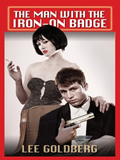
The Man with the Iron on Badge,
your new novel, is that going to be a TV
series or are you keeping that to yourself?
Lee:
Don’t know. We’re out there
shopping it around.
MFP:
You’re pitching it?
Lee:
We’re out there pitching it. It’s
about a guy that learned everything he knows
about being a detective from watching shows
like |
 |
Spenser:
for Hire, Mannix and Rockford
Files and discovers that reality is
very different from the fiction and that
everything he learned is wrong. It’s
sort of a comedy, but it stops being funny
pretty fast when he has to deal with reality.
MFP:
Is he you?
Lee:
In a way. In reality when you get knocked
unconscious it’s not like a nap. You
don’t wake up and get in another fist
fight and have sex with women. You’re
knocked out. You lose control of your bladder
and your bowels, you see double and then
you’re on medication. You’ve
got a concussion for god’s sake. I
deal with the reality of what happens in
this book. In private eye books and movies
and TV shows the detective always has a
quick quip, has a friend on the force, is
supremely self confident, great with his
fists. Well, that’s not reality. And
this hero’s not great with his fists
and he doesn’t have a quick quip and
the sex is bad. He finds out there aren’t
any women falling at his feet. In TV shows
and movies and books, a detective’s
in a car chase and he sideswipes 17 cars
chasing the bad guy. He runs through an
intersection and there’s a collision
and then he dives through the front window
of Nordstroms and catches the bad guy and
everyone goes, “Great job, Spenser!”
But in reality all those cars he sideswiped,
those owners will come after him for the
damages. The people who are injured in the
intersection will sue his ass. The police
would cite him for reckless driving. His
insurance company would dump him. Nordstroms
would sue him. It’s like dealing with
the reality as opposed to the fiction. That’s
what The Man with the Iron On Badge
is about.
MFP:
Okay. And just another question. This one’s
from Seth.
MFP
Photographer: Oh, no, no don’t. I
was just kidding.
MFP:
Okay, are you sure you don’t want
to ask if Dick Van Dyke ever told him anything
about Chitty Chitty Bang Bang?
MFP
Photographer: I can’t believe you
asked that. |
Lee:
He never said anything about Chitty
Chitty Bang Bang, but my daughter was
watching Mary Poppins and loving
it, so I said how would you like to meet
Bert the chimney sweep? And she said “Oh
yeah, yeah!” So we go down to the
set and I say, “Dick would you mind
if I bring my daughter down to meet you?”
And he said “Oh no, bring her down.”
She’s like four of five. So she comes
down. She doesn’t recognize him! So
Dick does the entire “Chim Chim Cheree”
song and dance for my daughter, but there’s
not even a spark of recognition. Now I’ve
worked with Dick for years and he was just
that guy I worked with, but at that moment
I got a chill. Oh my god! I’ve been
working with Dick Van Dyke! How come nobody
told me. And he’s doing that whole |
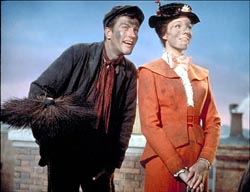 |
da
da da da chim chim cheree and my daughter’s
hiding behind me terrified. I’m asking
does anyone around here have a camcorder.
It’s amazing. He’s doing the
whole thing. It was great moment, but she
didn’t recognize him. But it was the
moment when I thought, Oh my god, I’m
working with Dick Van Dyke!
MFP
Photographer: It’s nice to see an
actor step into the character. A lot of
them won’t do that.
Lee:
He was great. He was a wonderful guy to
work with.
MFP:
Who was your favorite actor that you’ve
ever worked with.
Lee:
Dick Van Dyke.
MFP:
Your least favorite?
Lee:
I won’t talk about my least favorite.
And Viveca Fox is also fantastic, is also
terrific to work with. The rest I’ll
leave that to you to figure out. I’ve
never worked with Tony Shalhoub, but I hear
he’s wonderful. Andy and the staff
speak so highly of him. So I’m looking
forward to meeting him.
MFP:
Any parting words of wisdom?
Lee:
No, but if you discover that you need that
stuff do not be embarrassed or hesitate.
I’ll be happy to answer them again
by email. |

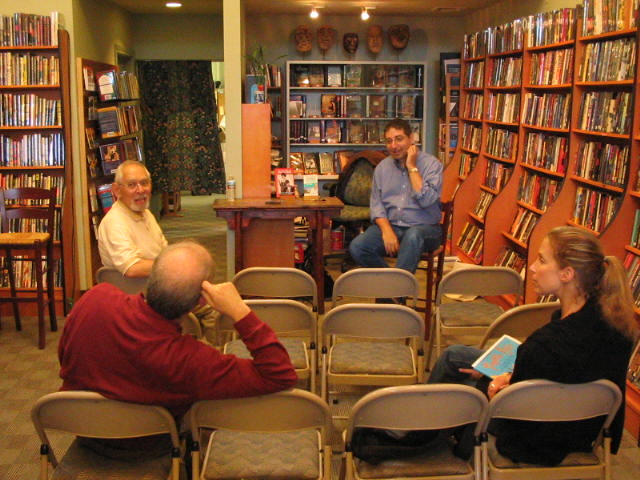
The
Book Signing
What
Seth and I did after the book signing

|
  
|
|
|
|
|