| 
|
|
|

September 27, 2007... 9:00am
|
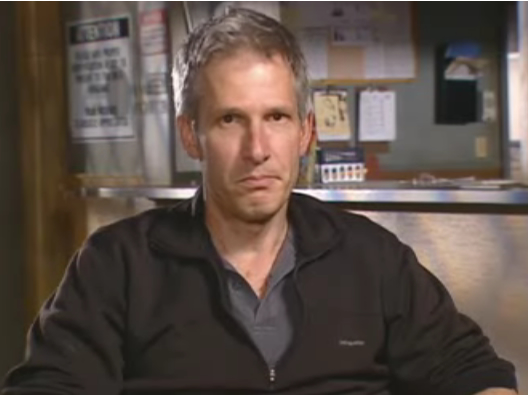
He's
also the co-creator (along with
Ross Abrash writer of "Mr.
Monk and the Employee of the Month")
of
Underfunded a series developed
for the USA Network which has yet
to be picked up. Unlike
most of the Monk writers,
who work
in New Jersey, David has settled
in Los Angeles where Monk
is filmed.
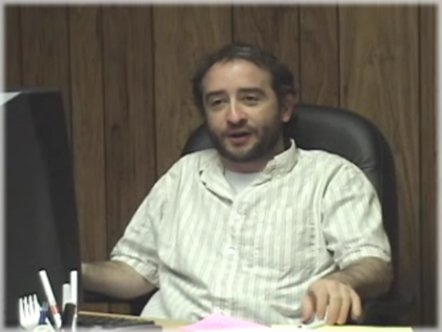
David
agreed to do a phone interview with
me and graciously answered almost
all of my questions.
MFP:
Has Monk been renewed for season
seven?
David:
Oh, gosh, I’m so sorry to
be coy right out of the gate. The
answer as of this conversation is
no, but between you and me it looks
promising. I’d say there’s
a seventy or eighty percent chance
we’ll be back for another
year.
MFP:
Do Tony and the other producers
want to continue for another season?
David:
All of us would love to come back,
yes.
MFP: USA
wouldn’t have the network
they have today if it weren’t
for Tony and the show.
|
| David:
That’s probably true. I mean
Monk is their flagship
-- the pride of their fleet. We’re
proud of the work we do as writers,
but there’s no question that
Tony being the superlative actor
that he is, is probably the primary
reason the show is so successful.
MFP:
I don’t know. You give him
everything to say, so I think you
writers count right up there.
|
|
David:
Make sure you underline that.
MFP:
Okay.
David: Italicize it as well and
put it in bold.
MFP:
It looks like for season six the
ratings have leveled off a little.
Is that a concern for the network?
David:
Actually, they’ve been happy
with the ratings. We do very well
for ourselves and we deliver a very
big audience to Psych
which follows our show at ten o’clock.
MFP:
Maybe this is something you can
talk about: what can we expect to
see in the second half of season
six, without revealing too much,
of course?
David: I can talk about that –
circumspectly anyway. Monk will
be solving various mysteries and
acting in a very eccentric way.
Okay, the second part is off the
record. Of course I’m kidding.
You are going to be seeing Monk
in various hopefully clever and
fun situations like – I’ll
be coy again, but your readers are
bright and will read between the
lines – Monk may or may not
be accused of murder and find himself
in very hot water. So the…
hindquarters Monk will be saving
in that particular show will be
his own. You may or may not be seeing
a special two-part episode. You
may or may not be seeing Monk going
undercover and infiltrating a Reverend
Moon type cult. You may or may not
be seeing Monk taking up painting
as a hobby and then stumbling into
a terrible crime. These are a few
of the things you may or may not
be seeing in the months ahead.
|
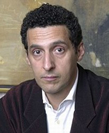
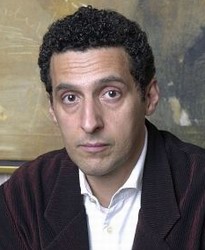
John Turturro
|
MFP:
May we or may we not be seeing John
Turturro come back as Ambrose?
David: Alas, that’s not even
a possibility this season. We’d
love for it to happen in the future
though.
MFP:
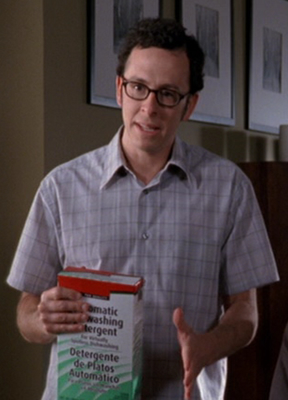
How about Kevin Dorfman?
|
David:
Um… Kevin is…. I’d
rather not give the game away. I’m
very sorry.
MFP:
No problem. Are there any guest
stars you can mention?
David: Yes, hold on, let me think.
Some prominent guest stars as of
now? [Long pause.] Let’s move
on for now. I’m so sorry I’m
just kind of rousing myself here.
|
|
MFP:
Yes, it’s kind of early.
David: Well, for me it’s early.
I’m the kind of guy -- as
are most of the writers -- we wake
up late and stay up late. [Laughs]
But let me think about that and
let you know in like 15 minutes.
MFP:
So is solving Trudy’s murder
and Monk’s reinstatement to
the force still goals for the show?
David: Yes. That’s the over-arching
goal… the through line of
the show. Of course, sometimes it’s
more prominent than at other times,
but yes, that’s always Monk’s
chief concern.
MFP:
So that hasn’t changed.
David: Nor will it.
|
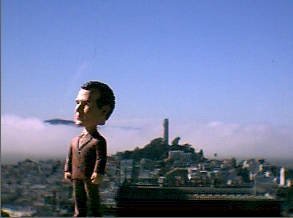
 Monk Bobblehead
on location in San Francisco
Monk Bobblehead
on location in San Francisco |
MFP:
Do you plan on doing any filming
in San Francisco this year?
David: There are no immediate plans,
unfortunately. That could certainly
change between now and late November,
but it’s unlikely.
MFP:
We’d be happy to have you
up here.
|
David:
Oh my gosh, and don’t think
we don’t love shooting up
there. It’s one of the loveliest
cities in North America, but it’s
purely a budgetary thing.
MFP:
Our film commission is desperate.
They may cut you a deal.
David: That’s perfect, because
we’re desperate too. So…
maybe it will happen.
|
| MFP:
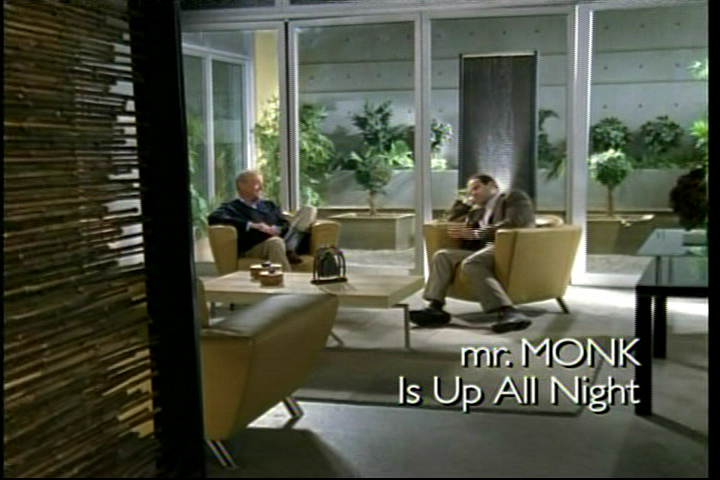
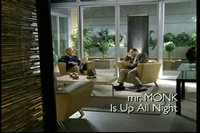
I want to ask a few questions about
“Mr. Monk is Up all Night.”
Everybody loved it [except the eye
doctor] by the way. The USA
website has a poll and it leads
[substantially] for the season.
David:
No kidding.
|
 |
MFP:
Yes.
David:
Okay, I’d like that perhaps
in bold as well, maybe a different
kind of font and I don’t know
if you have florescent colors.
MFP: Certainly.
David: Again I would have to attribute
that…. Obviously there’s
no question, Tony is a brilliant
actor and obviously the whole ensemble
is good, but I mostly would have
to attribute that to the writing,
wouldn’t you, Teresa?
MFP:
Oh, absolutely.
David:
There you go.
MFP: I might actually attribute
it directly to the last few scenes.
David: Yeah, the writing of the
last few scenes is what you mean.
MFP: Exactly.
David: No. Obviously it’s
very gratifying, but I’m not
going to take any credit for that.
By the way, Monk is a show
that is, in many respects, written
collectively. There are seven of
us, and the shows are outlined collectively
in the Writers’ Room. During
that time not only do we work out
the storylines, but lines of dialogue
are pitched out and even some of
the nuances that you see in the
episode are pitched out. Quite often
a lot of the ideas that you see
in an episode that people think
are clever may not generated by
the writer of record. It may have
been someone else in the room. Of
course, my brother Andy, the show
runner, takes a final pass on every
script himself. He does the final
rewrite on every script before it
goes before the cameras.
MFP:
I know you said in your writer’s
commentary that this one sprung
from a couple of ideas from Andy
and Hy
Conrad. Is that right?
David: Yes, yes.
MFP: But what in the script
can you point to and say, “That’s
all mine. That was me.”?
David: I can’t even…
that’s something I’m
reluctant to do. I’d actually
have to sit down with you and watch
it. But you know there are moments
since I’ve been working on
Monk…. I was off the show
for about half a year, but not counting
those episodes, where I didn’t
participate at all – in a
way it was kind of a blow to my
ego because those episodes, the
first half of season five –
those were some of the best episodes
ever. In fact I remember thinking,
“Oh my god, they don’t
need me at all.” I mean "Mr.
Monk and the Garbage Strike,"
"Mr.
Monk and the Actor"…
those were some great shows. But
everyone in the Writers’ Room
can point to moments in every episode
and claim them as his own.
MFP:
So it’s always a team effort?
|
| David:
It’s largely a team effort,
but keep in mind the dominant creative
force behind Monk is a
triumvirate: It’s Tony Shalhoub
and my brother Andy and to a lesser
degree another executive producer
named Randy
Zisk, but everyone is essential
to the process.
MFP:
And Randy Zisk is also frequently
the director [as he was on “Up
All Night”], right?
|
 Randy Zisk
 |
David:
Exactly. I would actually add….
I would say it’s a quartet.
I would also add Tom
Scharpling to that as well.
I mean all of us like to think we’re
indispensable, and we’re all
enormously important, but I would
say the first among equals are Andy,
Tom Scharpling, Tony and Randy Zisk.
MFP:
Is that where most of the decision
making occurs?
David:
Most of the decisions yes, but by
no means all.
|
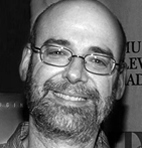 Andy Breckman
 |
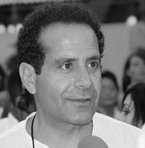
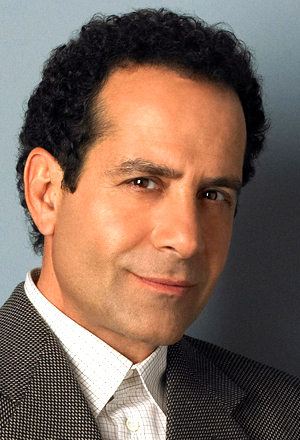
Tony Shalhoub
|
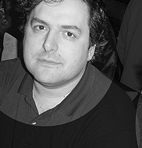
Tom Scharpling
|
MFP:
Back to “Up All Night.”
It seems to have a somewhat different
feel than most episodes… a
different structure. How did you
decide on that?
David: When you say it had a different
structure can you maybe expand on
that?
MFP: Well, in that it takes
place almost all in one night.
David: I think it just sprang out
of our eagerness to see how Monk
would handle insomnia and how he
would react to a crime if his faculties
were so impaired by having been
awake for 72 or 96 hours.
MFP:
The episode is also pretty light
on Natalie. Is that just what the
script called for?
David:
Yes, it was really just a function
of the structure and the structure
was imposed on us by the nature
of the problem Monk was facing.
We thought it would be more fun
if Monk was kind of out there on
his own, doubting his own senses.
If Natalie was with him corroborating
everything he was seeing, then we
wouldn’t be doing that.
MFP:
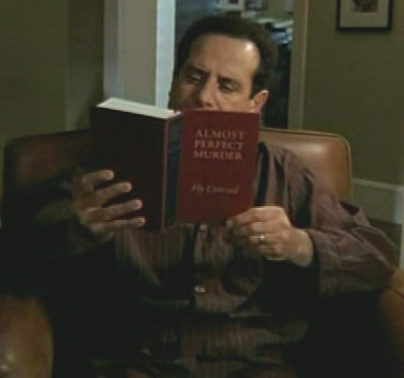
Whose idea was it to have Monk reading
a book by Hy Conrad in the episode? |
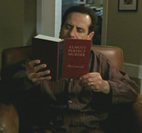 |
David: Hy kept pleading and begging
us to do that for years and we finally
gave in. No, not true, not true.
That’s a joke. Honestly, I
think someone in the room suggested
that Monk pick up a mystery novel
and I think originally it was an
Agatha Christie book. Someone had
pitched Monk opening the book to
page one and solving the case instantly
and being frustrated because now
he has to find some other way of
amusing himself at three o’clock
in the morning. |
Then
someone else -- I’ve forgotten
who -- had the idea of replacing
Agatha with Hy Conrad. We were thrilled
because it’s a great inside
joke.
MFP:
When you’re writing a script
like this do you picture who’s
going to play the role?
David: We usually imagine Tony Shalhoub
playing Monk.
MFP: Really?
David: Almost always. But you were
probably referring to our guest
stars.
MFP:
Right.
David: No, we don’t always
have an actor in mind, but it often
helps if you have a specific voice
in your head when you’re writing
a character. Occasionally we’ll
have a pretty good idea of who will
be playing a part. |
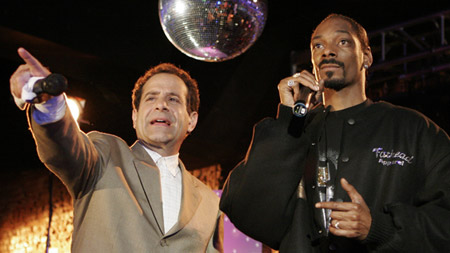
| MFP:
So, for instance in “Rapper”
you would probably have had Snoop
Dog in mind?
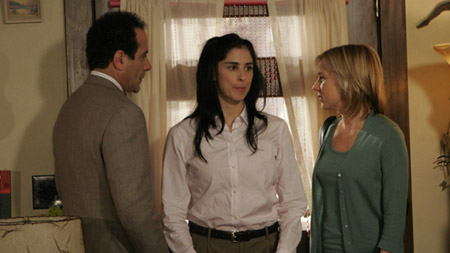
David:
I think he was one of a few that
was on our short list. Certainly
when we were writing “Biggest
Fan,” we were hoping Sarah
Silverman would come back to
play Marci Maven. If Sarah was unavailable
we’d have changed the name
of the character and had another
Monk groupie show up. The story
would have played out the same way,
but we were glad to get her. We
wrote that part with Sarah in mind
back when we did “Mr.
Monk and the TV Star.”
There are other examples of this.
"Mr.
Monk and the Other Detective,"
the Jason
Alexander episode, I think was
one where we were hoping to get
Jason Alexander. He was certainly
our first choice. We were lucky,
because there’s no guarantee
that you’re going to get the
person you were hoping for.
|
|
MFP:
Are you ever disappointed that an
aspect of the script doesn’t
come out like you thought it would?
David:
I think you just summed up my whole
life. But as for the scripts, of
course we are and I would say that
I think that’s certainly the
case with every writer in every
medium, not just television but
in features, novels, stage plays,
what have you. You always look back
on stories, even ones that you’re
very proud of and say, “Oh,
wow, I wish we had thought of this
at the time” or “I wish
we hadn’t thought of that
at the time.” Of course those
emotions fluctuate from mild to
extreme, but I doubt there’s
even one episode we don’t
wish we had another crack at.
MFP: There’s no perfect episode?
David:
Hmm… Well, I’m saying
no, but please put in parentheses
that I hope your readers will argue
the point, and loudly.
MFP: Okay. So was there anything
that was cut from “Up All
Night” that you thought they
should have kept in?
David:
There were a couple of things. First
of all I’m very proud that
my name is on that episode and I
think everybody did a great job,
but there were one or two things
that perhaps I would have done differently,
but I’m loathe to mention
them.
|
 |
MFP:
It’s been a few years now
since Bitty
Schram left. Still too soon
to talk about it?
David: Why don’t you get more
specific and we’ll see how
much I can reveal.
MFP: Was she simply dissatisfied
with the role or the money or was
there a genuine desire on the producers’
part to take the show in another
direction? Or both?
|
David:
Yeah, I would say things were a
bit more complicated than the press
reported, but even now I’m
still reluctant to elaborate. Let
me just add, and I can’t go
into a lot of detail about those
complications, but I will say –
and take this as an article of faith
-- that it was never as simple as
just the money.
MFP:
So what was your reaction to the
fan reaction?
David:
I guess the short answer is, we
expected it. We expected some controversy.
We expected some indignation. We
knew how much people loved Bitty
and she was wonderful in the part,
no one’s arguing about that.
But I gotta say that we’re
thrilled to death with Traylor
Howard.
MFP:
So were you confident, knowing that
Bitty was leaving, that you could
get past it and go on?
David:
Frankly, not at first. We sure were
hoping we could. We had some great
stories we wanted to tell, but we
weren’t ever sure in the beginning.
We were never certain that the character
of Natalie
Teeger would catch on and be
someone that we could write with
as much confidence as Sharona.
|
|
Happily,
we quickly realized that she was.
This was a character that we all,
more importantly, adored as much
as Sharona. In fact, I’ll
say this for the record, much as
I loved the character of Sharona,
I think Natalie is first among equals.
I love her character and I love
Traylor in the part. The reason
is -- and this just comes down to
personal taste -- she just is warmer
to Monk than Sharona was. Sharona
cared deeply for Monk, but there
was this tough-love aspect to her
relationship with him that I never
quite warmed up to. Natalie’s
a lot more nurturing. So with a
gun to my head, I would say I might
prefer the episodes with Natalie
just a little bit more. |
 |
MFP:
Was there ever any consideration
of other assistants before you settled
on Traylor as Natalie?
David:
There was an audition process and
there were some talented people
who came in, but Traylor really
had that rare combination of warmth
and relatibility and humor that
the part required. It’s our
fault entirely that we don’t
always give her enough comedy to
play, but when we do she knocks
it out of the park. Even when we
don’t, she finds little bits
of business and reactions that are
really very funny.
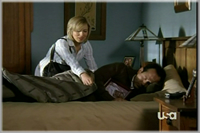
MFP: In introducing Natalie what
were the main problems in writing
the character?
David:
Again, the problem was in stepping
up and writing a character that
would be as indelible as Sharona,
but in a somewhat different way.
|
 |
We
finally hit upon that approach,
which was that Natalie’s approach
to Monk was warmer. I mean, she
addresses him as Mr. Monk unlike
Sharona who called him Adrian. It’s
more of an uncle/niece kind of a
thing in some respects. You know
Monk is like the eccentric uncle
that needs looking after. |
MFP:
Any plans for Natalie to ever address
him as Adrian?
David:
Well, the dynamic would shift a
bit if she started calling him Adrian.
I guess the short answer is I hope
that she won’t, although nothing’s
impossible.
MFP: What adjustments did you have
to make when Traylor Howard became
pregnant with writing the character?
David:
We clearly had to get a little bit
more clever. For example, the bathing
suit episode was off the table.
I’m joking, but there were
certain situations we couldn’t
put Traylor into as soon as she
started showing. And when she was
really further along we wanted to
get her off her feet as much as
possible. So we tried to accommodate
her. She may have been marginalized
in a couple of episodes, I’m
dry for any specific examples of
that right now, but I’m sure
that you and your readers can come
up with some.
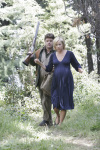
MFP:
Well, I can come up with “Mr.
Monk Visits a Farm."
|
That’s
true. That’s true.
MFP: Which she wasn’t in except
for a couple of scenes.
David:
Yes, one that should have leapt
to mind because my name is on it.
MFP:
Exactly. So she was just too far
along at that point to hide it very
well?
|
 |
David:
Yeah, but it’s funny. It’s
the kind of a challenge that a lot
of shows face, particularly shows
that have been on the air for a
while. Usually if there’s
a recurring female character quite
often the actress in the role gets
pregnant and they have to start
getting clever in addressing it,
or in hiding it. We hope we were
clever.
MFP: You were. Some of the lamp
placement was very good.
David: [Laughs] Yeah, you got to
give credit to Randy Zisk and the
directors for being artful in that
regard.
MFP: So how do you think the New
Jersey/L.A. split effects the production.
Is it helpful, is it a pain?
David: Opinions vary. We think it’s
helpful. The network might argue
with us. We like the feeling of
autonomy we get from being 2700
miles away from Los Angeles. You
know we have a great relationship
with USA Network and with everyone
there, but we like being able to
be mostly left alone when we write
these stories. Of course when the
scripts are finished the network
will always weigh in. Tony and the
actors will weigh in, but when we’re
taking our first pass at the scripts
we like being left alone. I think
that the geography helps.
|
|
|
|
MFP:
Anything you don’t like about it?
David: During the winter? Plenty. You know
obviously there are the extremes in temperature.
At least for me who’s kind of settling
into Los Angeles now, it’s something
I can do without, but keep in mind that
I’m a consulting producer. I’m
part time now. I left the show for half
a year to do a pilot for USA that unfortunately,
as of now, hasn’t been picked up,
though it may find life eventually.
|
Underfunded
|
MFP:
That’s Underfunded?
David:
You’re good Teresa, my God.
MFP: Well, I watched it. They did
show it.
David: They did. They did show the pilot.
They didn’t pick it up for series
yet.
|
MFP:
So that’s still up in the air then?
David:
It’s got a pulse. It may yet happen,
one way or another. Watch this space for
more details. But I left for half a year
to do that and when I came back it was as
a consulting producer, which means my responsibilities
were cut if not quite in half, at least
by a third. I’m in the Writers’
Room in Summit now only about 8 to 10 weeks
a year. So your last question may be better
addressed to the writers who are full time,
because they have to be there for a good
ten months out of the year… with the
exception of John
Collier, who’s full time but works
out of LA. When he’s not in the writers’
room at the top of each season, he spends
a good part of his time on set.
MFP:
So do you have responsibilities in L.A.?
|
| David:
I fill in for Collier on set one day a week
and I write one script a year and I weigh
in by phone on every script to one degree
or another, and again I make two trips to
the writers’ room each year for four
to six weeks at a shot.
MFP: So how are suggestions from one coast
to the other communicated?
David: Well, nowadays tentatively. Are you
saying, how does the network communicate
their suggestions?
|
Jonathan
Collier
|
MFP:
Well from the network and just
from the production end of the show to the
writers’ end?
David:
I’ll very briefly walk you through
how that works. What happens is the writer
of record will turn in his script or her
script to my brother who will then take
his pass. That draft gets turned in to the
network. We then have a read-through about
ten days before the start of production
on each script. That’s where all the
actors and all of the production personnel
sit around a table in Los Angeles with a
speaker phone, so that the writers in New
Jersey can hear them, and all of the actors
read the script out loud with the first
assistant director on the show reading the
descriptive stuff. You
know, Monk enters the room and looks around,
that stuff. We and everyone listen and hear
how it plays. At the end of the read through
we’ll have what’s called a notes
session. That’s where everyone involved
will weigh in and say this works and these
other elements don’t seem to work.
We in the Writers’ Room will then
discuss those elements. Some changes we
will agree with, other things we’ll
fight for.
I
should add that Tony has a huge voice in
this. We certainly listen to everyone, but
I would say Tony is first among equals in
those conversations: Tony and Randy Zisk.
But all of the actors have ideas, and they
usually have merit: Ted and Jason and Traylor
and Stanley. They’ll all weigh in
and we’ll really listen to everybody.
We then take our next pass at the script
based on all of these conversations that
follow the read through. That becomes the
production draft, but even during production
questions will come up. Of course Randy
Zisk and the director and John Collier are
present on set to address these things and
the writers in Summit are available by phone
whenever those guys want our input during
shooting, which generally takes seven or
eight days per episode.
MFP:
At this point then, do the actors have a
lot of input into the characters?
|
|
|
David:
Yes, after the read through, after everybody
has finally seen the script and heard it
spoken aloud, all the actors or most of
the actors will weigh in to one degree or
another, generally about their own characters.
You know, “Is this something my character
would do? Would it be possible that instead
of running up and tearing the umbrella out
of the guys hand I can do something else?”
|
Whatever. And
we’ll generally try and accommodate
the actor, because at a certain point
an actor becomes at least as familiar
with his character as you are and actually
in most cases more familiar. That’s
certainly the case with Tony. He knows
Monk better than anybody. He’s got
an unerring instinct for what Monk would
and would not do.
MFP:
I think I remember him mentioning in an
interview that he was a little uncertain
about Monk hearing voices in one episode.
"Daredevil,"
I think. So how do you think that worked?
David: How did it work on set when it
came time to do the scene?
MFP: Yes.
David: Well,
Tony had to make sure that this behavior
was consistent with his character, that
Monk would be hearing these voices. Tony
had to make sure he could justify it and
finally he did and played it great. But
believe me if he couldn’t justify
it, if he had said categorically, “Absolutely
not. There’s no way this scene would
go down like this,” I’m sure
we would have rewritten the scene.
|
MFP:
I notice that Emmy
Clarke has just turned 16. Are upcoming
storylines with her going to further explore
her being a real teenager?
David: She may or may not be going for
her driver’s exam.
MFP: Oh.
David:
Watch this space, yes. We’re going
to definitely be writing to that. And
she may or may not end up as an unwed
mother in a dirty, desert commune.
MFP:
I don’t believe you.
|

Emmy
Clarke
|
David:
No, you’re right. That was a joke.
That will definitely not happen.
MFP: So what is your favorite episode
or episodes and why?
David:
“Three
Pies” turned out great. I mean
many episodes turned out great, but “Three
Pies” is one that’s in almost
everyone’s top three. “Mr.
Monk Takes His Medicine” is one
that I also love. Of the ones that I wrote
I guess I’m proudest of “Back
to School” simply because I’m
particularly proud of the murder in that
episode. I don’t want to ruin it for
anyone who hasn’t seen it, but the
killer has a seemingly unbreakable alibi:
He was on the campus of this private school
when this woman seemed to commit suicide
a quarter of a mile away by leaping off
a clock tower. Monk is sure that this gentleman
is lying, that he had something to do with
her death, but his alibi is unbreakable.
He was proctoring the SATs at the same time
this woman’s body was heard to hit
the roof of a car at the base of the clock
tower. Monk knows he did it but he doesn’t
know how… until the end. And it’s
what this guy did to give himself the alibi
that I’m particularly proud of. I
don’t pat myself on the back very
often but I will in this case.
MFP: So generally are the mystery parts
more difficult than the comedy parts to
come up with?
David:
Without question, yeah. All of us have comedy
backgrounds and it’s something that
we’re pretty good at. We all love
mysteries and we think we’re good
at them, but it doesn’t get any easier.
|
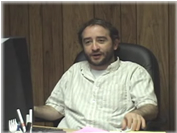
Dan Dratch |
We’re
constantly trying to avoid doing variations
of plots we came up with in other seasons.
You know, when you’re getting up near
80 or 90 some episodes, this gets harder
and harder, but we think we’re up
to the challenge. We think that at least
several times each season we come up with
some very clever mysteries, but yes, that
aspect is more difficult. Sometimes agonizingly
difficult. I should add that one episode
on a cruise ship that Dan
Dratch came up with is the one I’m
most sorry we haven’t been able to
film yet. It’s a brilliant mystery
idea. |
MFP:
Why hasn’t that been filmed?
David:
We haven’t been able to get a ship.
We tried to get permission to film on a
cruise ship a couple of years ago but were
unsuccessful.
MFP:
So do you have any least favorite episodes?
David:
I do, but I’m reluctant to mention
them.
MFP: How about why they’re your
least favorite?
David: Sometimes structurally you’ll
think of something later on … much
later than you should have… like while
the episode is being shown on TV. Other
times…. We have some wonderful directors,
but sometimes we’ll bring in a director
who is less familiar with the show and they
won’t quite capture the "Monk
tone".
MFP:
They want to impose their own?
David: Or they’re just not as familiar
with ours. Monk is a blend of mystery
and comedy and pathos. It’s an odd
hybrid that doesn’t really exist anywhere
else on the air. At least I can’t
think of any examples. Can you?
MFP: No, even a show like Psych that they’ve
matched with Monk has a lot more comic tone
than Monk has.
David:
Exactly, so Monk kind of strikes
this odd balance and it’s hard for
outside directors who come in for the first
time to capture that. So tonally, certain
episodes seem off to me. But you know that’s
rare I mean I’m proud of most of our
shows.
MFP: Is that why you use the same directors
a lot?
David:
Yes, without question. Again Randy Zisk
is supervising all of the directors.
MFP:
Of the scenes you’ve personally written
for Monk is there one in particular that
you think represents your best work?
|
David:
That’s a great question. I would
say some of the confrontations between
Monk and Andrew
McCarthy in “Back to School”
and another scene in “Back to School”
when Monk is on the clock tower trying
to figure out how this evil schoolteacher
could have done this crime and Monk is
expressing doubts in his own ability to
catch him. Those are moments that I’m
particularly proud of and I’m proud
of the final moments in “Up All
Night” as well. I’m sure there
are other examples that I’m too
punchy to think of right now, but those
leap to mind.
|
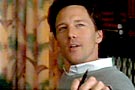
Andrew
McCarthy |
MFP:
What do you think the main differences are
between writing a script for an earlier
season like “Back to School”
and writing a script for the sixth season
like “Up All Night”? Or are
there any?
David: Well, except for the fact that you’re
writing for Monk and Sharona versus Monk
and Natalie, there really are no differences.
The challenges are the same. The challenges
are exactly the same and in some ways it
gets easier because you have more experience
with the character. You’re just more
familiar with Tony’s rhythms. On the
other hand you don’t want to repeat
yourself. So you know the advantage is kind
of offset by the challenge of not falling
into cliché, but the process is the
same. It’s coming up with a clever
mystery, a satisfying resolution and a context
or milieu for Monk to be in that’s
fun for the viewer. “Will it be fun
to watch Monk in this situation for 60 minutes?”
Monk being up all night for example. Monk
being on a farm for example. Is it a fun
milieu that will provide clever “Monk-ish”
situations: Monk milking a cow. Monk confronting
a room full of students. These are the questions
that come up in every episode. And that’s
another reason why “Cruise Ship”
is such a loss to us. You know Monk on a
cruise ship is a home run.
MFP:
Do you think the characters have changed
much?
David: Yes, I’m thinking in particular
of Ted
Levine’s character, Captain
Stottlemeyer and by the way, it’s
a change that I love. In the first year
of the show his character was much more
adversarial toward Monk and particularly
if you go back to the pilot. I don’t
know how long it’s been since you’ve
seen the pilot.
MFP: Not that long.
David:
There was a real rivalry and a real resentment
on the part of Stottlemeyer. Disher
had this kind of sycophantic relationship
with Stottlemeyer and he, too, was more
adversarial toward Monk.
|
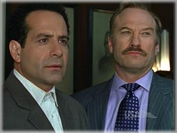
Monk and Stottlemeyer |
Now
we’re much more comfortable with how
those characters have evolved. A lot of
that is due to Ted Levine and Jason
Gray-Stanford. These are wonderful actors.
The relationships have evolved to the point
where —and it happened very slowly;
it happened in the course of a year, maybe
two years— where they’re very
supportive of Monk and they’re protective
of him, particularly in the case of Stottlemeyer.
Stottlemeyer is also a very capable investigator.
And you know we’ve even had him solving
a couple of cases, here and there. |
MFP:
I noticed this season he solves them a little
more.
David:
Yes, so I like how those characters have
evolved. I like that it’s not adversarial
now. There’s certainly a contentious
relationship with Monk. They’re exasperated
by him, as is everyone around Monk, but
they love him and look out for him and it’s
mutual. I don’t know how you and other
viewers feel about it. That’s a question
I can ask you right now is that something
that your prefer or would you rather it
was more adversarial?
MFP: Oh no, I much prefer Stottlemeyer’s
protective streak towards Monk.
David:
He really is like a protective older brother.
MFP: What about the character of Monk himself?
David: I think there’s been a refinement.
I don’t think he’s changed dramatically,
but I think there’s been a refinement
in his character…a distillation of
certain traits that were present in the
beginning. I guess the short answer is that
he’s the same now only more so.
MFP: So you think changing the character
in a significant way would ruin the show?
I mean, say he got much better.
David:
Unquestionably. Yes, yes. Curing Monk would
be great for him and bad for everyone else.
MFP: And does the same go for romance for
Monk?
David:
We dipped our toe into that pool, but yes.
If Monk is happy and fortunate enough to
find the love of his life and move on and
become reconciled to the death of his wife,
we’d be in a lot of trouble, which
isn’t to say it wouldn’t happen.
I’m saying that as of now it’s
unlikely.
MFP: What’s the same in every
Monk script? What makes it uniquely a Monk
story?
David: I think what we spoke about. It’s
this blend of comedy, mystery and pathos
in equal measure. It makes it unlike any
other show on the air. You’ll occasionally
see it on film. You’ll see that kind
of hybrid, but not so much on television.
You know, you have straight up mystery shows,
procedurals like Law
& Order and CSI
and Bones
and Cold
Case and shows like that. You’ll
have straight up comedy shows, too: obviously,
there are any number of those. Very few
walk the same line that we do.
MFP: So going back to the beginning
have you remembered any guest stars?
David: There’s no one huge unfortunately.
You know, there’s no Jason Alexander
or John Turturro. They’re wonderful
actors: they just may not be as high profile
as some of our other guest stars.
MFP: Do you have any other projects,
besides Underfunded that you’re working
on?
David: Underfunded is the big one.
I am working on a show (we’ll see
if I can sell it) about two investigative
reporters. I’m pitching it as Butch
Cassidy and the Sundance Kid meets
Fletch. It’s kind of a buddy
show ala Butch Cassidy and 48
Hours and Wedding Crashers
married to the notion that they’re
investigative reporters solving crimes.
MFP: It sounds good to me.
David:
Oh boy, I wish you were running a network.
MFP: So when you are pitching something
to a network are they expecting something
from you with kind of a Monk tone?
David:
Yes, they are. Please, I hope you emphasize
this, we love Monk and we love
writing it, but every writer has ideas of
his own he wants to get before the camera
either as a TV show or a movie or what have
you.
|
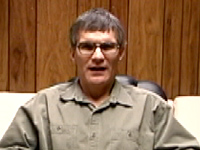 Joe Toplyn
 |
I
should say that Joe
Toplyn wrote a wonderful pilot this
year called Plan C, which may or may not
find a home. I hope it does. Dratch wrote
a great mystery pilot which may or may not
go at another network: a half hour mystery
with a detective hero. Tom Scharpling has
various things in development, one of which
is called Jeff
the Demon, which is a very funny
screenplay that he wrote, but he has other
scripts as well. Collier’s got some
great things. Hy Conrad’s attached
to adapt a British mystery for an American
audience, and Hy’s just terrific –
a short-story writer and a playwright –
so that’s got a real shot. |
As
much as we all love Monk we’ve
all got other irons in the fire. But, yes,
the expectation on the part of whoever we’re
pitching to is that whatever it is we’re
proposing will be just like Monk.
They always want your next thing to be like
your last thing. It’s the nature of
the game.
MFP:
Once again for the record, Season 7? Yes
or No?
David: For the record, you’ll have
to ask me off the record.
MFP: We heard on the Psych
renewal. They renewed that.
David: I’m sorry you mean renewed
that for season three.
MFP: Right.
David: Oh wow, when was that announced?
MFP: Last week [September 14th actually.]
David: No kidding. That I hadn’t heard,
although I’m not surprised.
MFP: Psych kind of depends on Monk for
that lead in, don’t they?
David: Well, they better not depend on it.
MFP: It won’t be there forever,
I know.
David: Exactly. But I’m sure they’ll
do just fine without us. I’m glad
I have your email I definitely want to get
you a list of at least a
few of the guest stars that we’ll
be seeing in the next seven shows.
MFP: Yes, just a few.
|
David:
Of course. And you know we almost never
get the guest star we want. I mean we often
do and often the person we end up with is
better than the person who we wanted or
at least as good. It’s just the nature
of the game and that’s true of movies
as well. Not that I’ve ever had a
film made. But you know the big example
is Indiana Jones. That was a role originally
intended for Tom
Selleck and he couldn’t do it
because he was doing Magnum PI, so they
went with a guy who was not a big star.
He’d been in a little movie called
Star Wars, but no one knew that he could
carry his own movie and Harrison
Ford got the part and did it great.
So you’re almost always having to
use someone else and often being thrilled
at the result. |
MFP:
I was always pulling for Peter Falk to play
Monk’s dad, but Dan
Hedaya did an excellent job.
David: And yes again, Dan Hedaya was one
of several actors who were being considered.
I don’t think he topped the list.
Now we say, “Oh my God, we got stupidly
lucky on that one.” That happens a
lot. It really does.
MFP: Are you happily married now?
|

Dan Hedaya
|
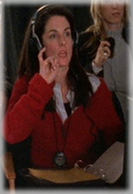 Cameron Meyer
 |
David:
Oh my God! I got stupidly lucky on that
one. [Laughs]
MFP:
So I guess that’s a yes.
David: Yes. I tricked the most wonderful
girl ever [Cameron
Meyer] into falling in love with
me. It seems to be working out.
MFP: Good job.
David: She was on the show a couple of years
ago. [Mr. Monk and the TV Star]
MFP:
She was in the episode you were in, right?
|
| David:
Oh my lord, please don’t underline
that part, but yes. You know, I’m
still fuming over the Emmy committee’s
oversight, but I think it’s just a
jealousy thing. I guess that year it was
just Ray
Romano’s time to be recognized.
MFP: That must be it. Speaking of which,
why doesn’t Ted Levine get Emmys every
year. How come he doesn’t even get
nominated?
|
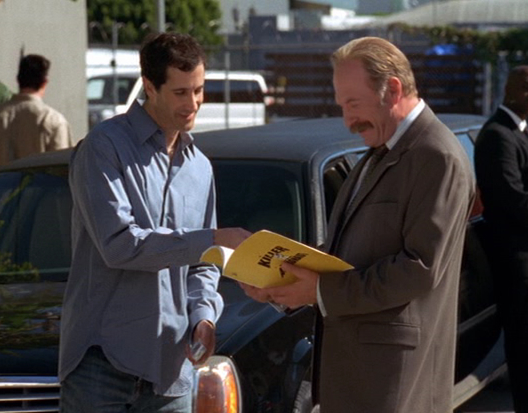
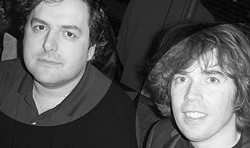
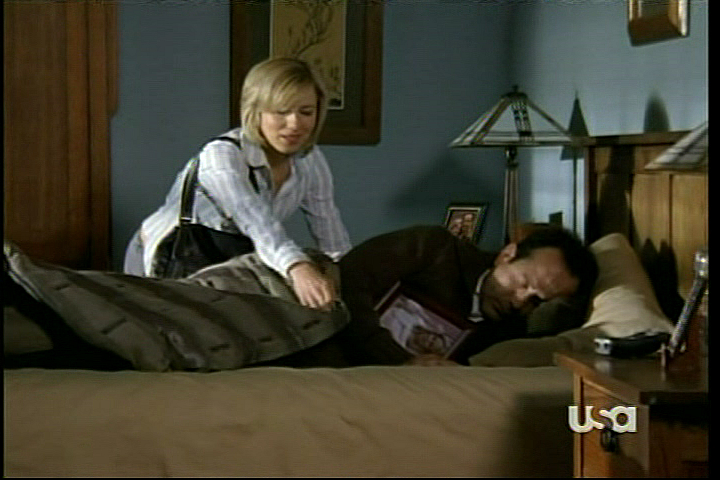
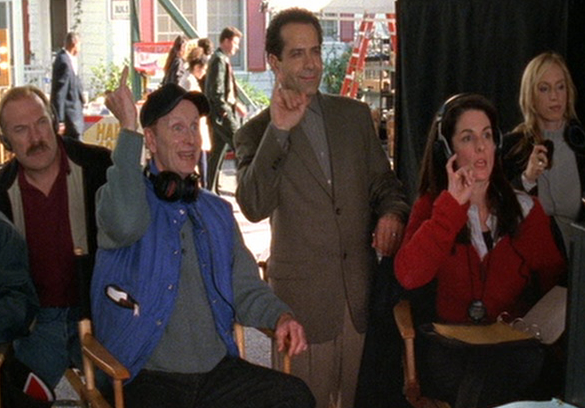
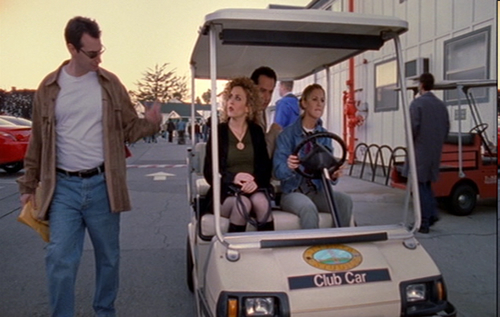
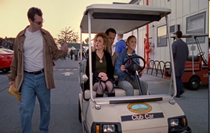 David Breckman in "TV
Star"
David Breckman in "TV
Star" |
| David:
You know, I don’t pretend to understand
their process. I really don’t know
how they come up with some of their…
I mean, sometimes you nod your head and
say, “Of course, that person should
be nominated.” Other times it’s
a poser. In fact the most egregious example
of that was a couple of years ago. This
to me is mind boggling: Ellen
Burstyn.
MFP: That’s right, for her 14
seconds on screen.
David: Isn’t that staggering?
MFP: It seems clear what happened there:
they just voted for the name.
David: Regardless, they had to have known….
I guest they didn’t know. They didn’t
actually watch the movie, but didn’t
they know if they gave her that award there’d
be an uproar? Anyway, sometimes it’s
just puzzling. That’s certainly the
case with Ted. He’s just wonderful
as Leland Stottlemeyer and the interplay
between Ted and Jason is always terrific.
We’ve come to depend on it. They play
off each other so well. Down the road, I
could imagine a show with those two characters.
MFP: Oh, yes.
David: So yes, I don’t pretend to
understand that. Ted’s being robbed
is my short answer to that question.
MFP: That’s what I was thinking.
David: And what are your favorite episodes?
You don’t have to say any that I wrote.
MFP:
Well, more recently, this season I really
enjoyed “Up All Night.”
David:
Oh, bless your heart.
|
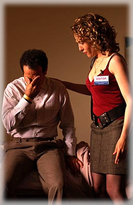 Mr. Monk Goes to the Asylum
 |
MFP:
But also I thought “Bad
Girlfriend” was fantastic. I liked
that very much. From earlier “Mr.
Monk Gets Drunk” is one of my
perpetual favorites and I like “Mr.
Monk and the Girl Who Cried Wolf”
and “Asylum”
is my favorite.
David: No kidding. That’s your favorite
episode?
MFP: Yes.
I guess the upside there is, wow, my name
is on that one. The downside is that it
means we reached our peak very early.
That
was the episode that pulled me into the
series.
|
| MFP:
Oh my goodness.
So, that’s my favorite. [I can't
believe I left out "Employee
of the Month." I looooove that
one. and "Sleeping
Suspect" and "Mrs.
Monk" and "Garbage
Strike" and....]
David: Wow, well that’s very gratifying.
We’re proud of every episode you mentioned
there. Wow. I think you’ll like the
next seven. We’re very proud of the
stories and obviously we have the best actors
on television. I think you’ll enjoy
them.
MFP:
I know Andy mentioned in an interview that
you’re going to be having a Trudy-centric
episode. Is there a title for that one yet?
|
| David:
Andy said a Trudy-centric episode?
MFP: Well, an episode involving the
mystery of Trudy’s death.
David: Well, he may or may not be alluding
to our two-part episode, which may or may
not involve Monk being accused of murder
although for God’s sake I don’t
mean Trudy’s murder. I’m not
referring to that at all. There is a title,
but I may not be able to disclose it.
|
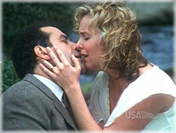 Adrian and Trudy
 |
[Of
course we already know it's "Mr. Monk
is on the Run," Parts I and II]
MFP:
Okay, if you can, you let me know.
David: Okay, I will. But that one touches
more directly on Trudy’s murder than
any episode we’ve done probably since
“Takes
Manhattan.” So there it is.
MFP:
All right. That’s all the questions
I have.
David: Thanks, Teresa. This was fun.
Thank you, David.
|

True
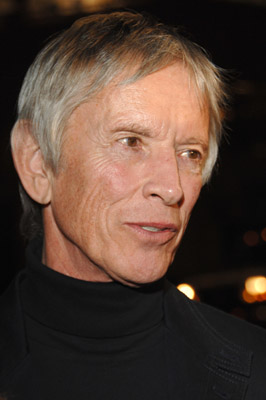
to his word, David emailed me the
names of a few upcoming sixth season
guest stars —
David:
Not all of this year's final seven
episodes have been fully cast yet,
so the following roster of guest stars
could conceivably change and expand
by the time they are, but upcoming,
high-profile guest stars for the second
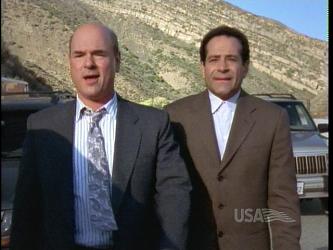
half of season six include Larry
Miller (reprising his role from
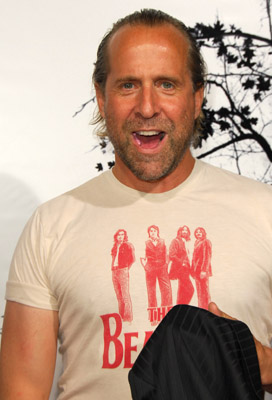
MR. MONK AND THE TRAFFIC JAM) Peter
Stormare (FARGO, ARMAGEDDON, the
series "PRISON BREAK") and
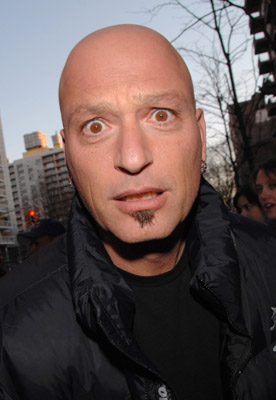
Howie
Mandel ("ST. ELSEWHERE",
"DEAL OR NO DEAL," many
more). Watch this space for more details
as new information comes in.
David
emailed me later with a few more details
—
David:
Yes, you will definitely be seeing
one of the guest stars whom I mentioned
in my email -- Peter (FARGO) Stormare
-- playing the chief bad guy in MR.
MONK PAINTS HIS MASTERPIECE. The fans
are going to flip for this guy since
he's a villain who's both smarmy and
lovable, and Peter is just outstanding
in the role.
For
the key supporting role of a duplicitious
sheriff in MR. MONK IS ON THE RUN,
we landed the wonderful, the talented,
the charismatic, the stupendous...care
to guess who I'm talking about here?
I am referring to none other than
Misterrrrrrr.... wait for it...SCOTT
GLENN!!!
Mr. Glenn's been famous for years,
and he is constantly working in features
(he was seen most recently in the
THE BOURNE ULTIMATUM) but he doesn't
do a lot of TV, and boy were we lucky
to get him. I'm sure it didn't hurt
that he was, apparently, a huge fan
of the show.
And
the most exciting news of all
—
David:
Finally...as it happens, I am slated
to be directing a Monk episode (my
first!) in only a few weeks time.
MR. MONK AND THE THREE JULIES will
be the last show to be filmed this
year (not the last to be broadcast
, mind you, but the last to be filmed.)
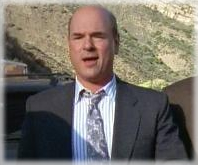
Larry
Miller in
Mr. Monk Gets Stuck in Traffic |

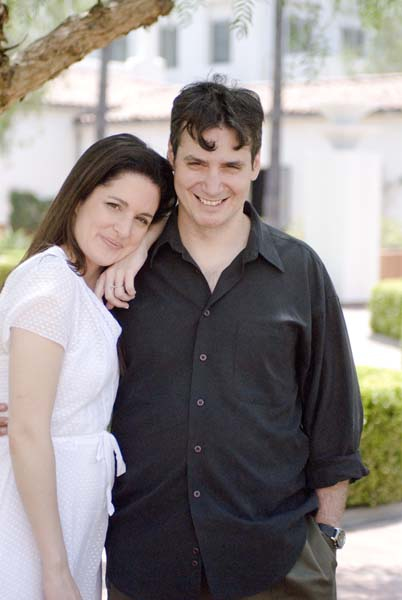
Cameron
Meyer & David
Breckman
Soon-to-be Monk Director |
|
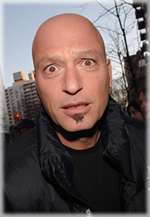
Howie Mandel
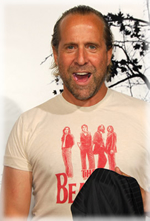
Peter Stormare
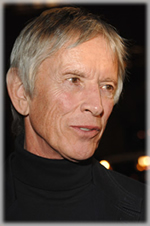
Scott Glenn
|
|

  
|
|
|
|
|